5 Commercial Landscape Design Tips from a Damascus Project
Table of Contents
Introduction
Location: Damascus, SyriaYear: 2015
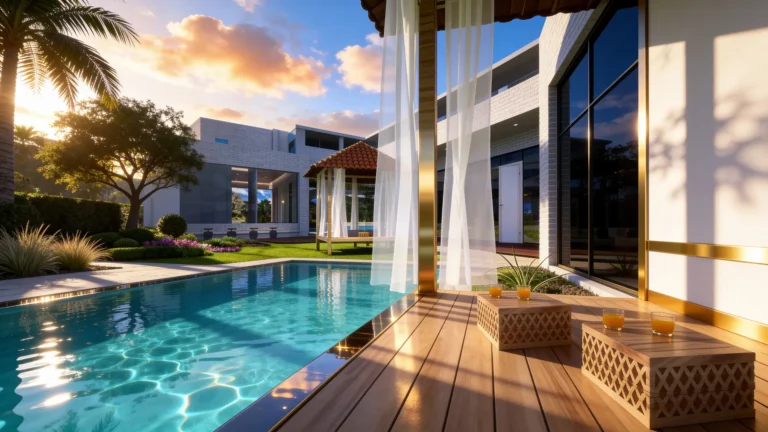
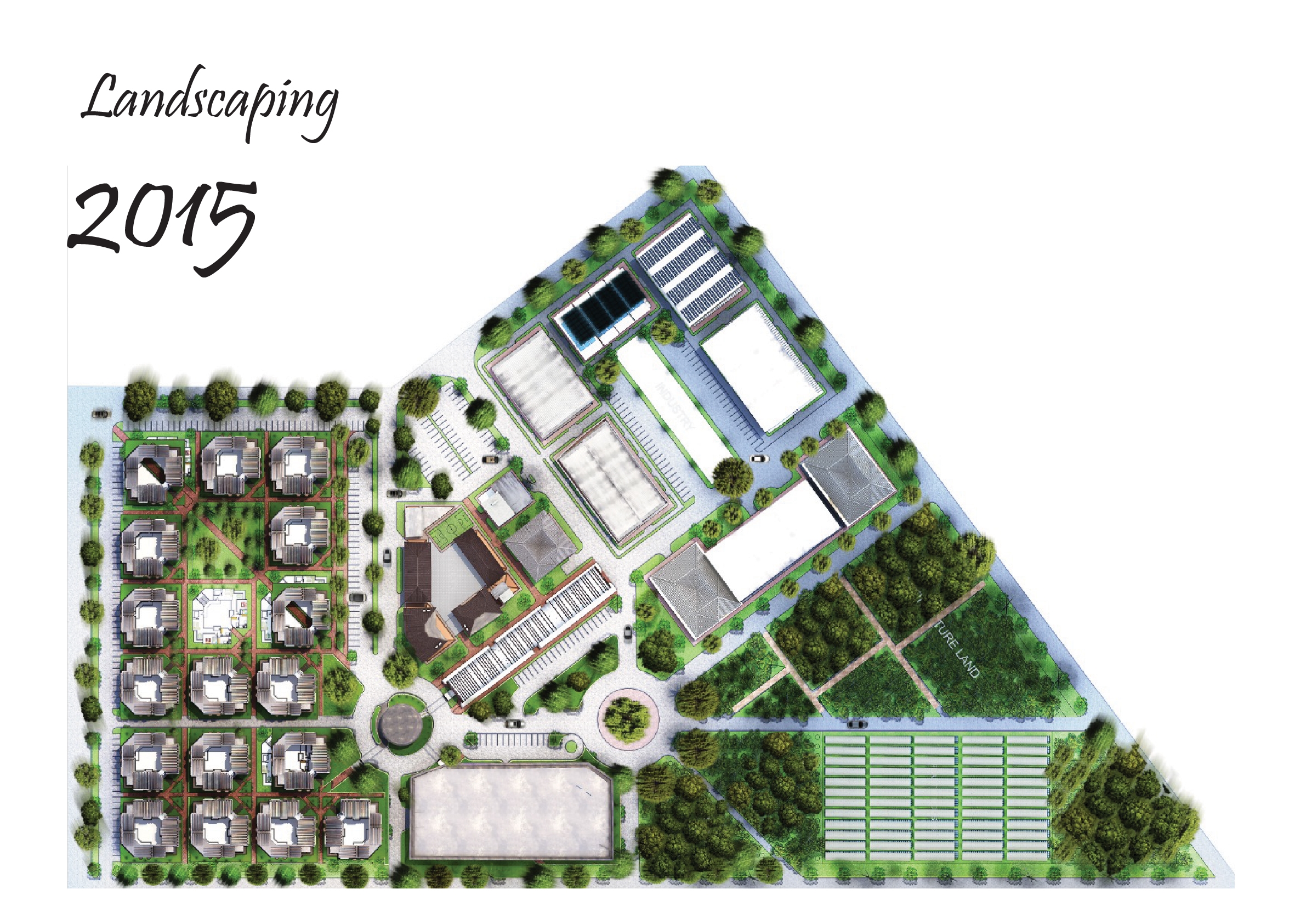
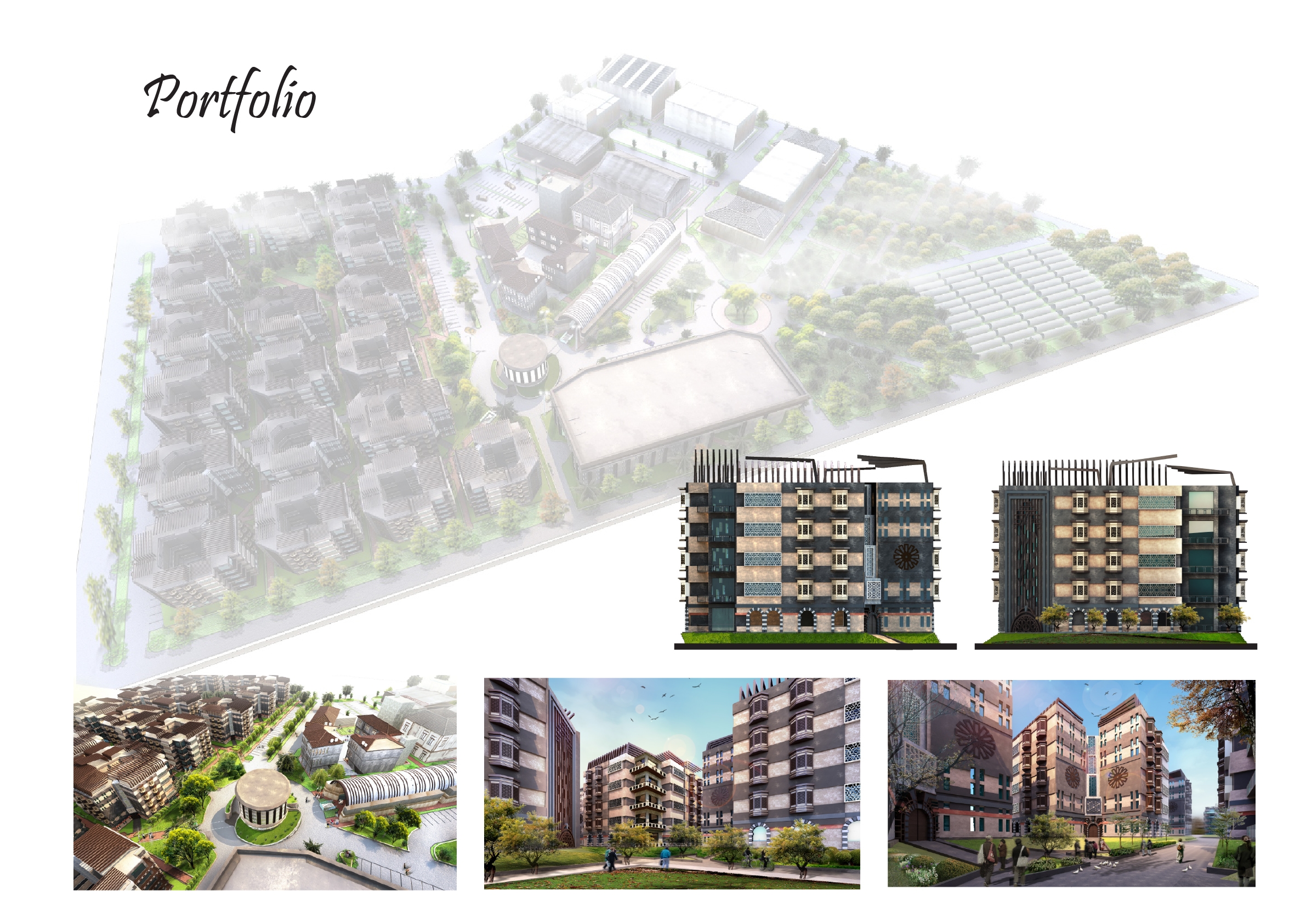
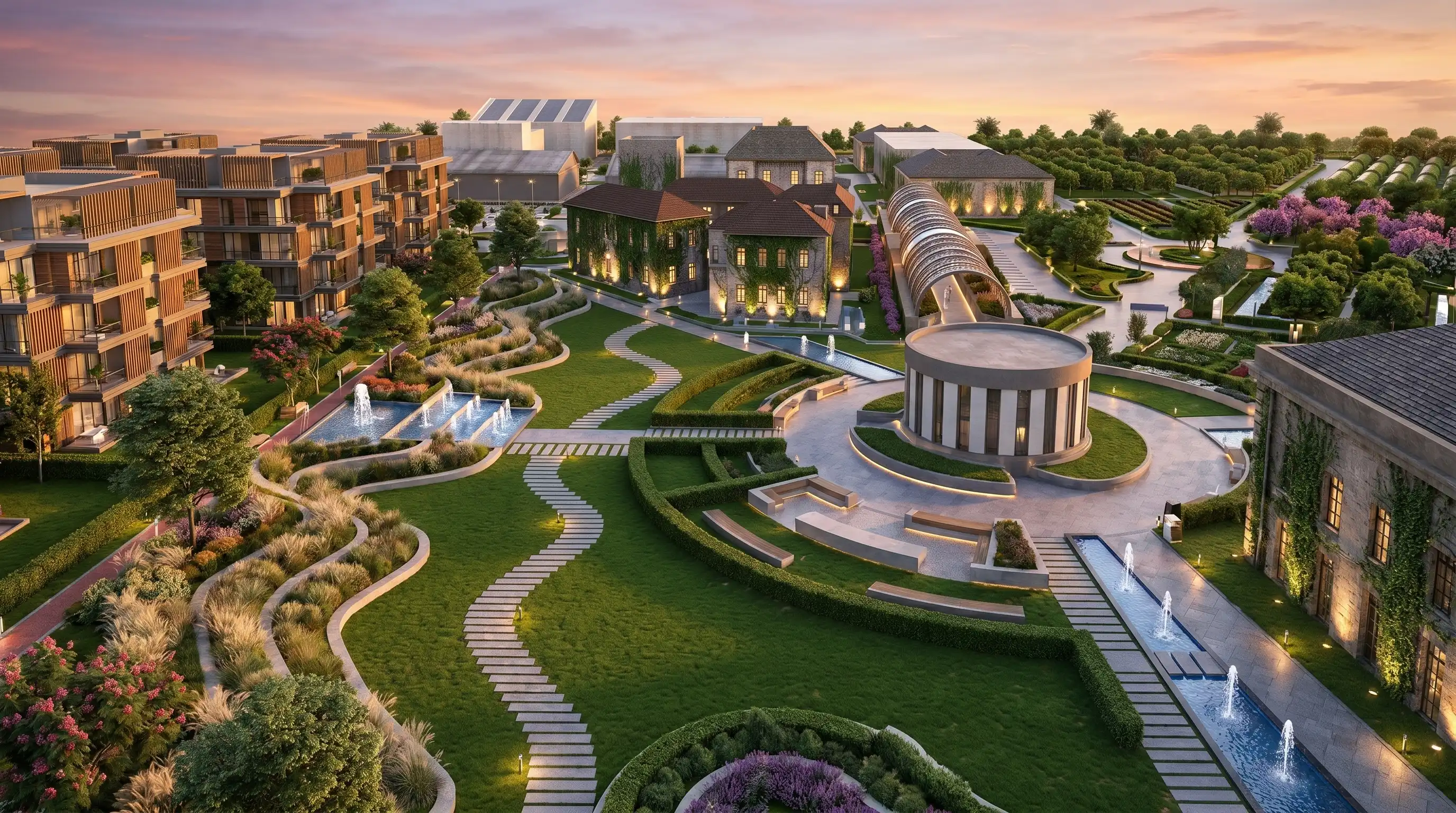
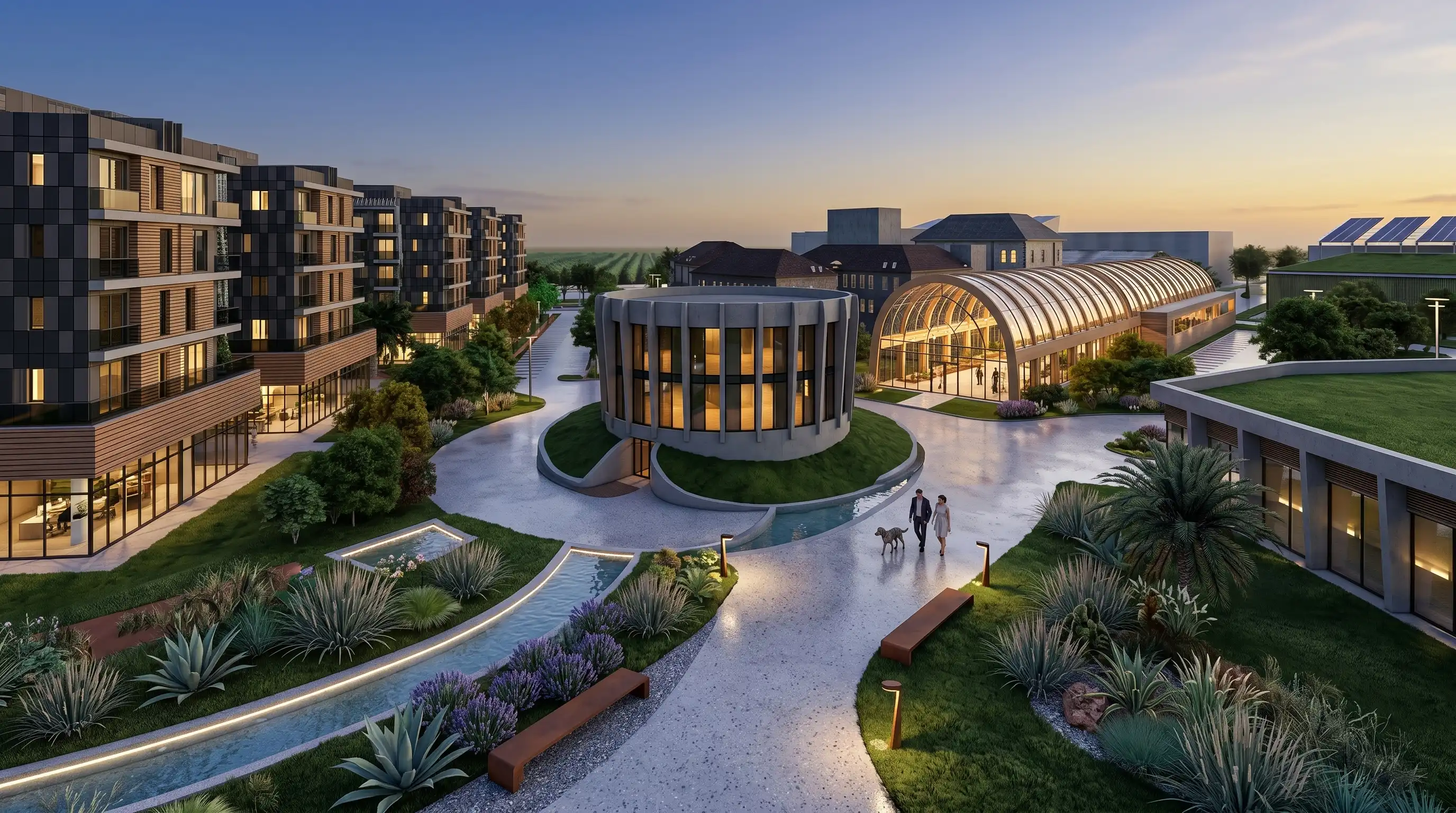
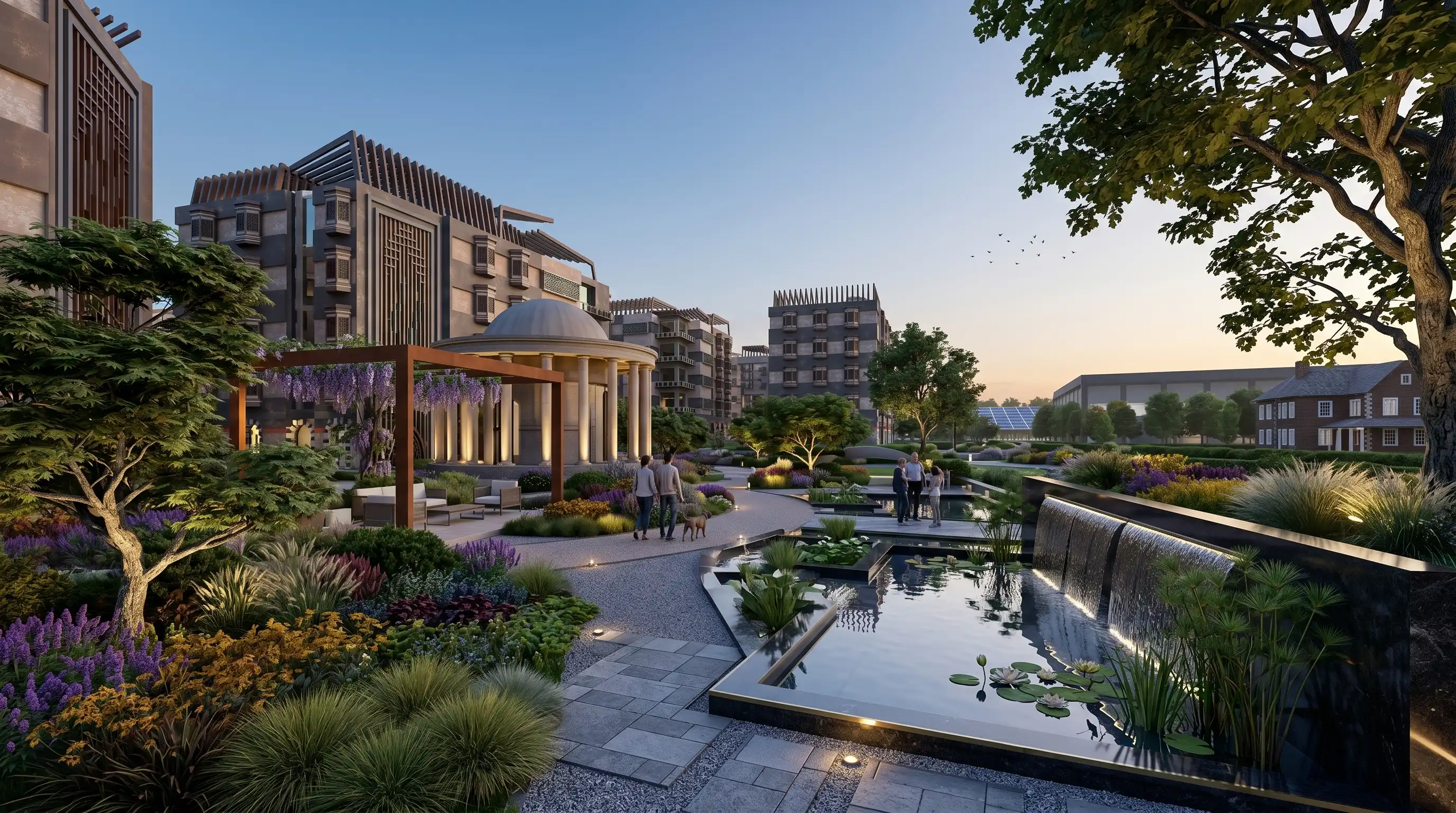
Commercial landscape design is judged years after handover, not on opening day. This completed Kenania project in Damascus, Syria is the reference for the five strategies below: site reading, hardscape and softscape balance, water efficiency, lighting and maintenance planning.
A commercial landscape has to welcome visitors, support daily operations, reflect the brand and take heavy use, all in the dry Damascus climate.
Start with a Thorough Site Analysis
Before any design work begins, we invest time in understanding the site. For this Damascus commercial project, we analyzed:
- Climate & microclimate — sun paths, prevailing winds, and heat reflection from surrounding surfaces
- Soil conditions — drainage capacity, composition, and suitability for proposed planting
- Existing context — neighboring architecture, sight lines, pedestrian flow, and vehicle access
- User behavior — how staff, clients, and visitors will move through and interact with the space
This analysis informed every decision that followed — from plant selection to paving materials to lighting placement. Skipping this step is the most common mistake in commercial landscape design.
Have a project like this in mind? Message Kenania directly on WhatsApp.
Chat on WhatsAppUnderstanding the Site — The Foundation of Great Landscape Design
- Climate & microclimate — sun path, wind patterns, and heat reflection
- Soil conditions — drainage, composition, and suitability for planting
- Existing context — neighboring buildings, views, and access points
- User behavior — how people will move through and use the space
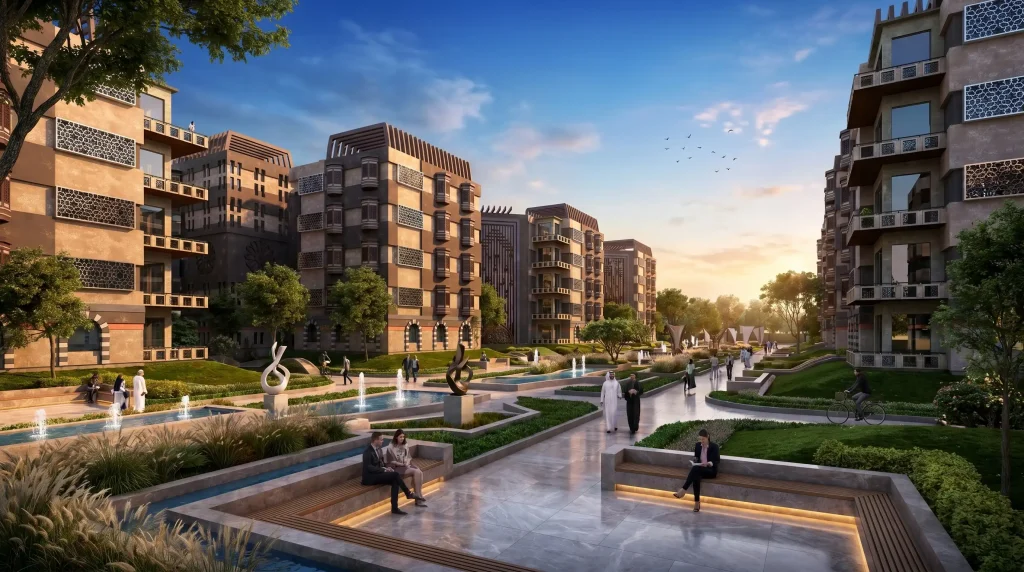
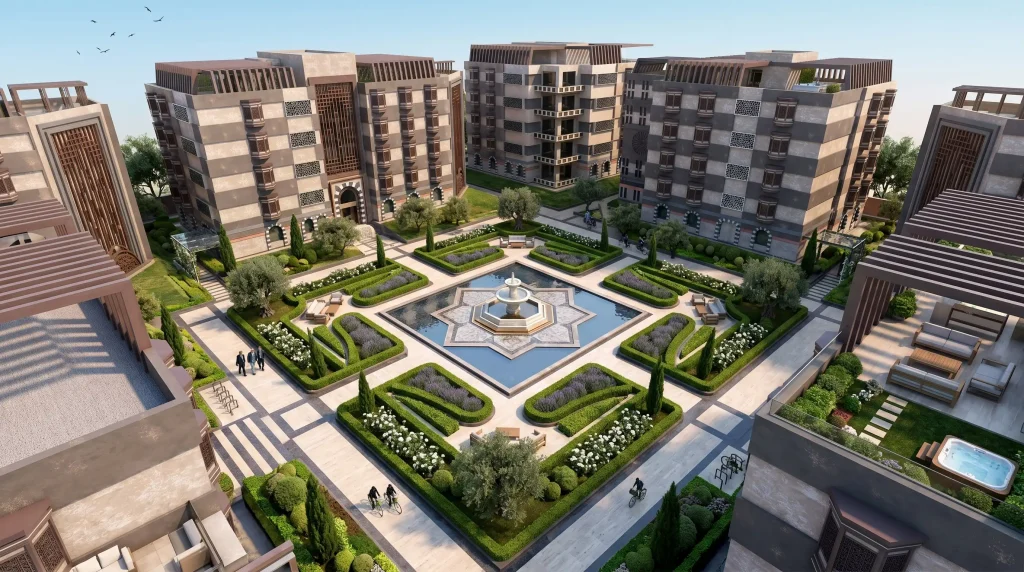
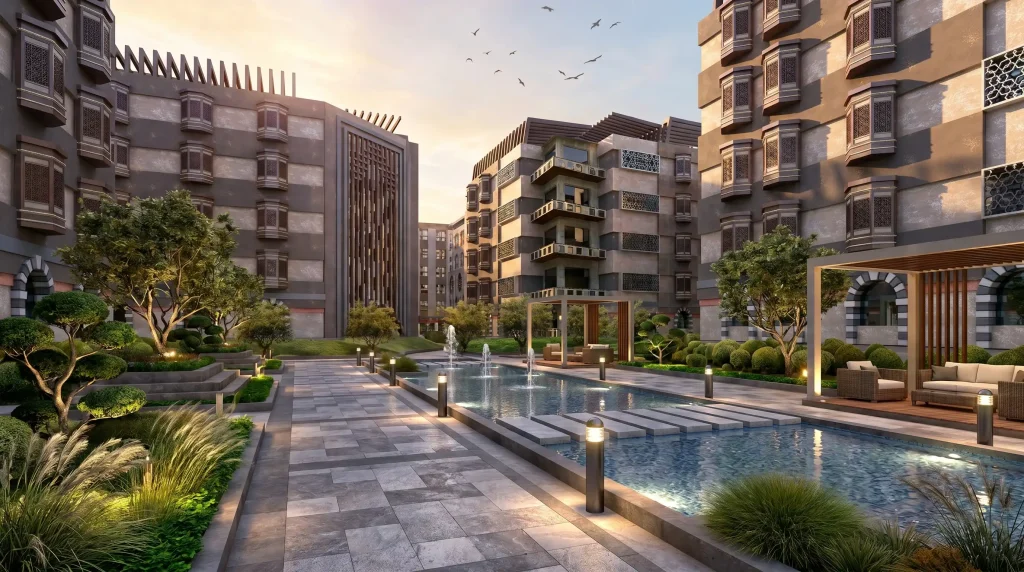
Hardscape & Softscape Balance
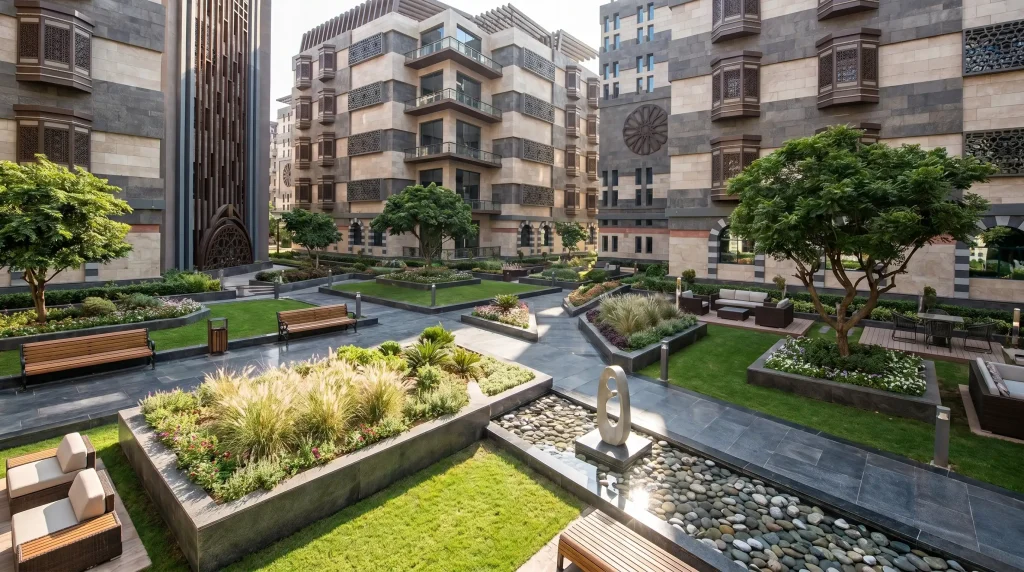
- Hardscape — natural stone paving, shaded seating zones, and defined walkways
- Softscape — drought-tolerant native plants, ornamental trees, and lush green buffers
- Lighting — ambient path lighting and accent uplighting for evening use
Water Management & Sustainability
- Drip irrigation zones with smart controllers
- Native xeriscape planting to reduce water demand
- Permeable paving to manage stormwater runoff
- Shade structures to reduce heat island effect
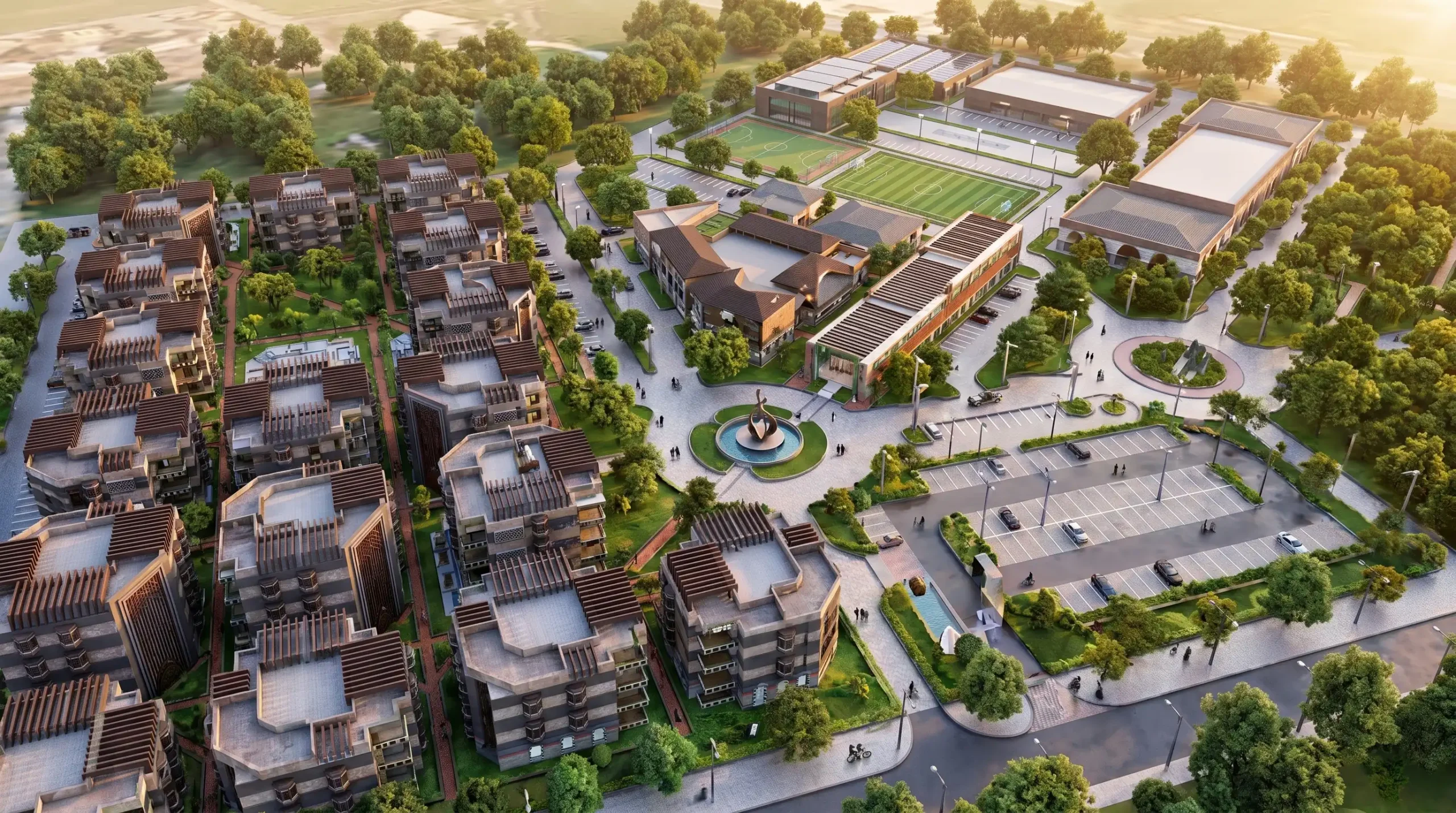
Balance Hardscape and Softscape
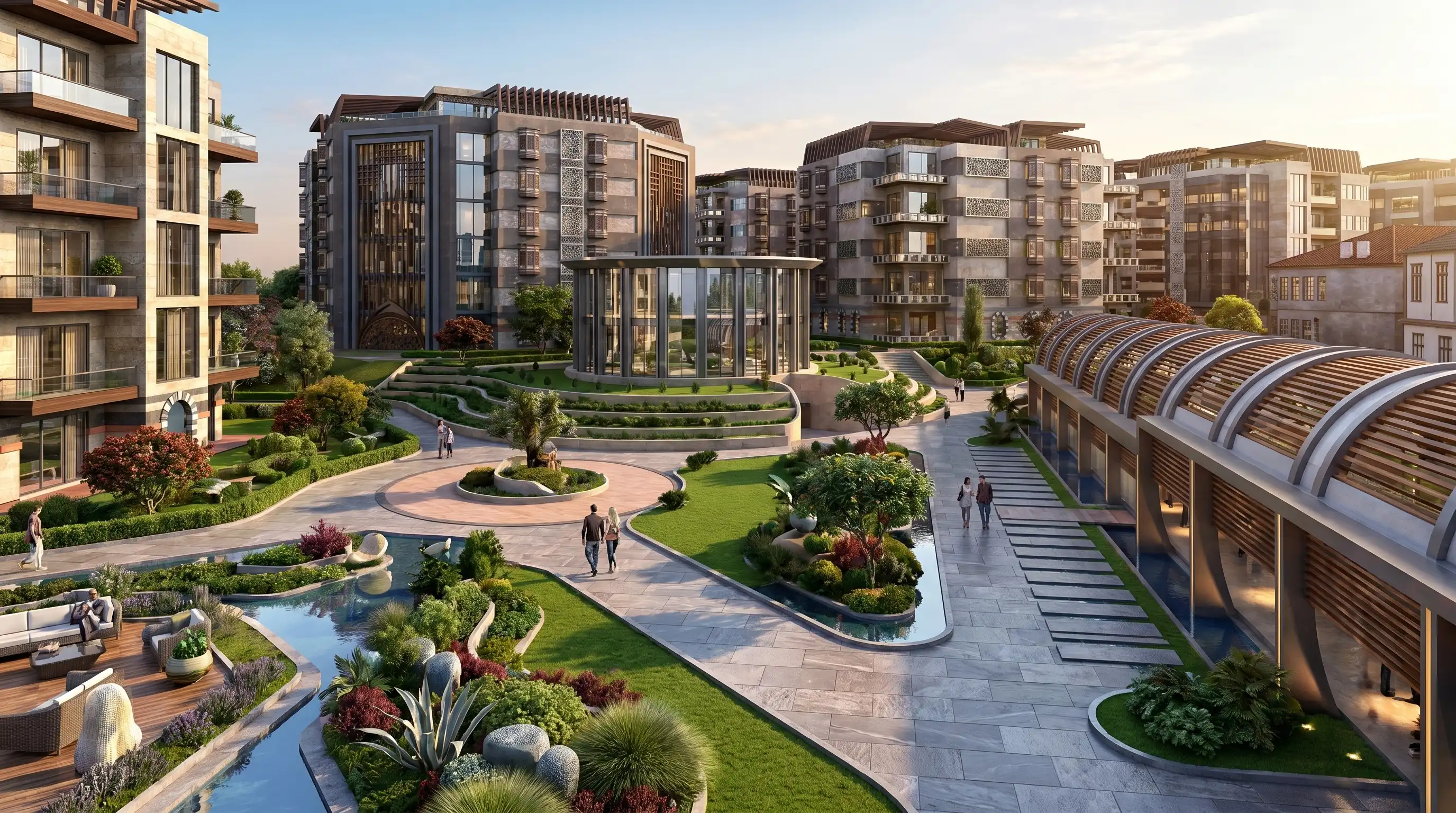
A commercial landscape should feel neither like a concrete desert nor an untamed garden. In this Damascus project:
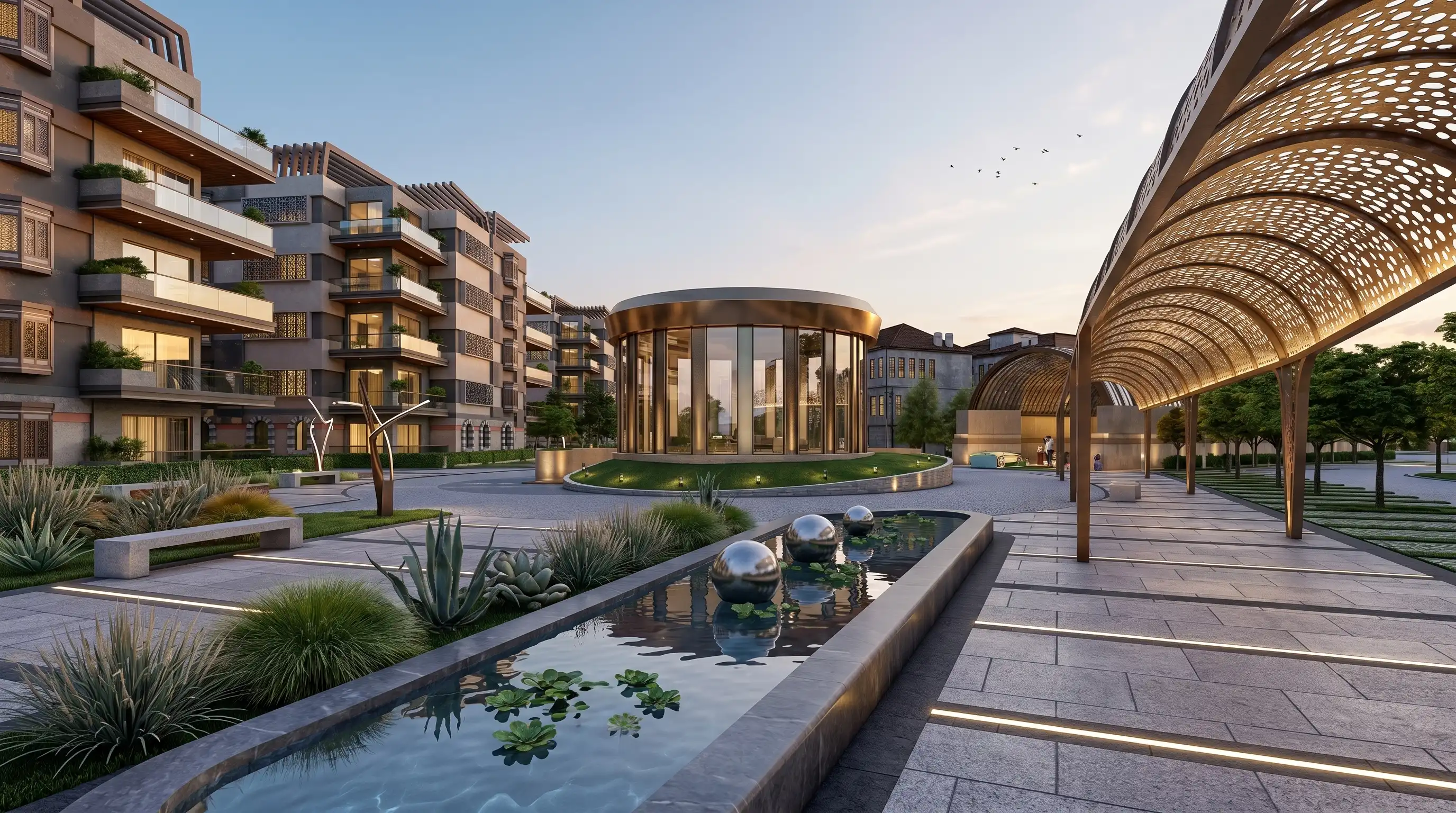
- Hardscape — natural stone paving defines clear pathways, plazas for gathering, and shaded seating walls. We used local stone to reduce cost and reinforce regional character.
- Softscape — drought-tolerant native plants, ornamental trees, and layered ground covers soften the hard edges and provide visual interest across all seasons.
- Lighting — low-level path lighting guides movement after dark, while accent uplighting highlights key trees and architectural features.
Essential Strategies for Commercial Landscape Design Success
| Define clear zones | Separate circulation, seating, and green space for intuitive flow |
| Use native planting | Lower maintenance, higher survival rates, authentic local character |
| Layer lighting | Extends usability into evening, enhances safety and ambiance |
| Design for all seasons | Evergreen structure with seasonal accents for year-round appeal |
| Integrate branding | Commercial landscapes should reflect the business identity |
Prioritize Water Efficiency & Sustainability
Water is precious in the Middle East, and commercial landscapes consume significant resources if not designed responsibly. We implemented several water-saving strategies:
- Drip irrigation — targeted watering delivered directly to root zones, reducing evaporation and runoff
- Xeriscape planting — native and adapted species that thrive with minimal irrigation
- Permeable paving — allows rainwater to recharge the ground rather than overwhelming drainage systems
- Shade structures — pergolas and canopy trees reduce heat island effect and lower cooling costs for adjacent buildings
Sustainable design also reduces long-term operating costs for the property owner.
Questions about cost, timing or the next step? Ask Kenania on WhatsApp.
Chat on WhatsAppProject Highlights
| Location | Damascus, Syria |
| Type | Commercial Landscape |
| Services | Landscape Architecture, Hardscape Design, Planting Design, Irrigation Planning |
| Style | Modern / Contemporary |
| Area | |
| Status | Completed |
Why Choose Kenania for Your Commercial Landscape Project?
Multidisciplinary team — architects, interior designers, and landscape planners work together
Remote delivery — we work from our Damascus office and remotely across the Middle East
Proven portfolio — 200+ projects across commercial, residential, and hospitality sectors
Frequently Asked Questions
What makes commercial landscape design different from residential?
Traffic and liability. A commercial scheme has to take footfall it did not choose, stay legible to first-time visitors, and survive a maintenance contract rather than an owner who cares. That pushes you towards durable paving, generous circulation and planting that tolerates neglect.
How do you keep a commercial landscape green with limited water?
Zone the irrigation by need, not by geometry, and choose species that match the local rainfall before you design the layout. Drip on planting beds, sub-surface where turf is unavoidable, and a soil profile deep enough to hold moisture. The American Society of Landscape Architects publishes solid guidance on water-efficient site design.
What is the right balance of hardscape to softscape?
There is no fixed ratio, but pave what carries load and plant everything else. Over-paving is a common and expensive mistake: it raises surface temperature, increases runoff, and makes the space feel like a car park with trees in it.
Does Kenania take on landscape projects outside Syria?
Yes. We work on site and remotely across the MENA region and beyond, from concept and planting plans to construction detail packages. Send us the site plan for a scope and timeline.
Related projects
- Residential Complex, Jeddah — architecture and space planning
- Modern Reception Design, Dubai — commercial front-of-house
- Architecture & interior design services — full project scope
Ready to start? Send Kenania a photo, a plan or a short brief on WhatsApp.
Chat on WhatsApp