
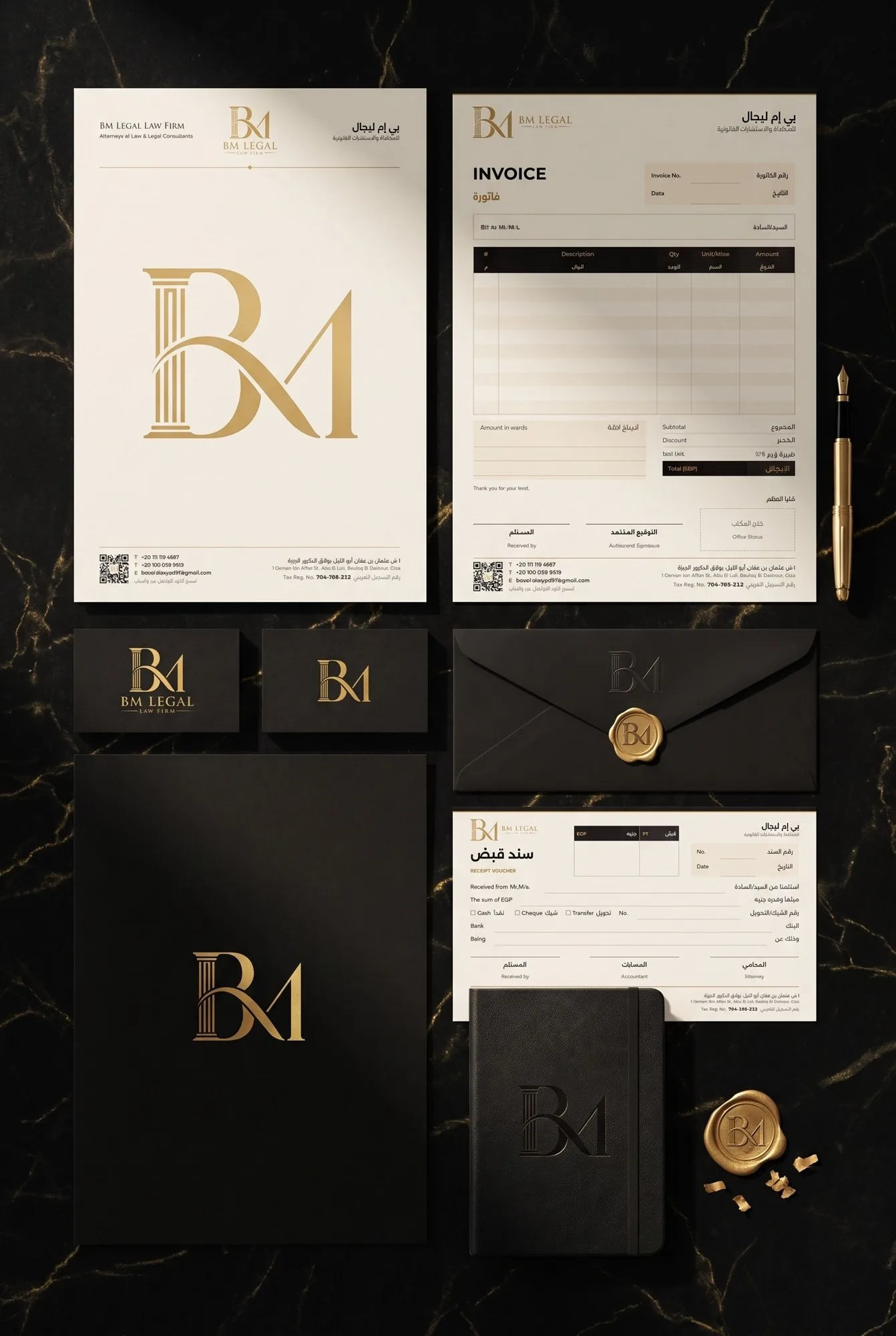
Letterheads · Invoices · Cards · Signage
Stationery and Print Design
Letterheads, invoices, vouchers, business cards, envelopes, folders and signage — designed with your identity, delivered print-ready, and handed over as templates your team can fill in without breaking the layout.
5
stages from the document list to the press proof
2
languages on every document: Arabic and English
300
dpi artwork behind every editable template
1
print guide that keeps every run consistent
Table of Contents
What stationery and print design should give your business
Kenania handles stationery and print design as part of the identity, not after it: the letterhead, the invoice and the business card are where clients meet your brand most often, so we design them to print correctly and to stay correct when your team edits them every day.
A logo is seen once on a sign; a letterhead, an invoice and a business card are handled every week. They are the pieces clients keep, file and forward, so a weak invoice undoes a strong logo faster than anything else.
We design print as a system: one grid, one type family for Arabic and English, one set of colour values, applied to every document the business actually uses. The result looks like one company on every page.
Most offices also need to fill those documents in themselves. So the everyday pieces are delivered as editable Word or Google Docs templates with the artwork fixed behind the page, while the pieces that go to a printer are delivered as print-ready PDF with bleed and crop marks.
For colour on press we work to the International Color Consortium profiles your printer uses, and we proof gold, black and brand colours before anything is printed in quantity.
What you receive
- Print-ready PDF files with bleed, crop marks and CMYK colour
- Editable Word templates for letterheads, invoices and vouchers
- Arabic and English versions laid out right-to-left and left-to-right properly
- Vector logo files in every colourway the print needs
- A short print guide: colours, paper, finishes and minimum sizes
- Proof checks with your printer before the full run
What we design
Every document a business sends, hands over or hangs on a wall. Everything below is part of stationery and print design delivery.
Letterheads and office stationery
Arabic and English letterheads, memo and fax sheets, delivered as editable templates with the header and footer fixed behind the page.
Invoices, vouchers and forms
Invoices with VAT rows, receipt and payment vouchers, quotations and delivery notes, built as clean tables that stay aligned in Word and Google Docs.
Business cards and envelopes
Bilingual business cards, envelopes, folders and notebooks, with special finishes such as gold hot-foil, embossing and spot UV specified for the printer.
Stamps and seals
Company stamps and seals drawn from the logo, tested at stamp size so the mark stays legible in ink on paper.
Signage and large format
Shop fronts, reception walls, door decals, roll-up banners and exhibition panels, prepared as scaled vector artwork for fabricators.
Brand guidelines
A short guide that fixes versions, colours, paper and finishes, so the next printer reproduces your stationery exactly.
Print work behind this service
Published stationery and print design from Kenania: a law firm’s editable office set, Gulf company stationery and signage, a Dubai salon and clinic.
BM Legal — law firm stationery
Letterheads in Arabic and English, an invoice and two vouchers in editable Word, plus a 16-page guideline.

Brand identity portfolio
Letterheads, business cards, stamps and signage for companies in Saudi Arabia, the UAE and Egypt.
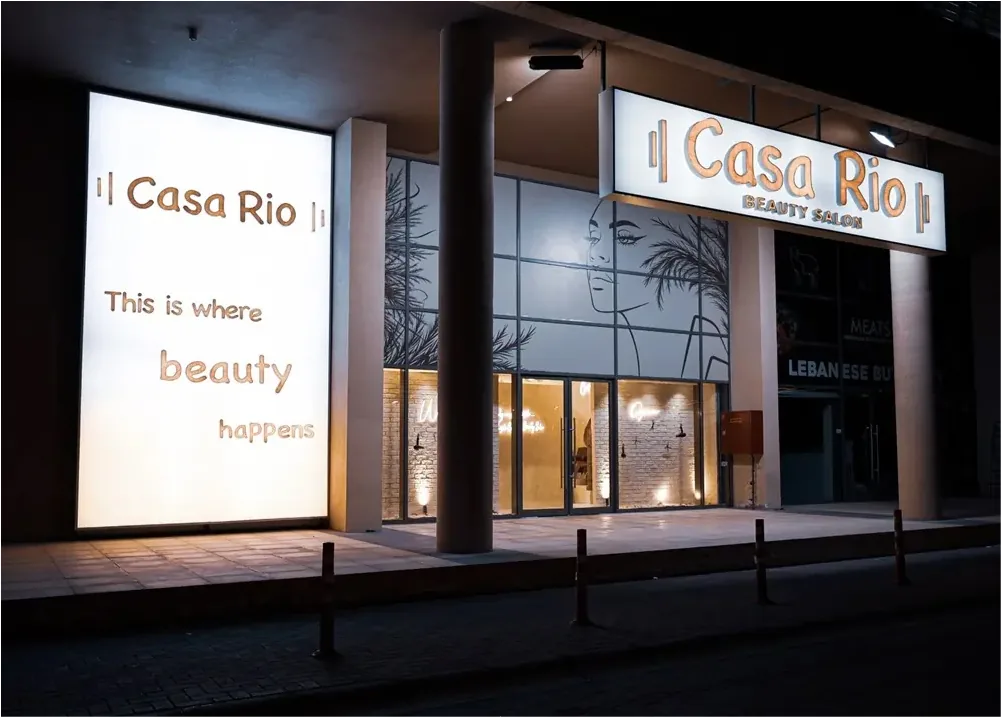
Casa Rio Beauty Salon, Dubai
Identity, shop-front signage and an offer system for print and social media.
How a print project runs
Five stages, each ending in something you approve before the next starts. This is how a stationery and print design project runs, from brief to site.
01
Document list
We list every document you send or print — letters, invoices, vouchers, cards, forms, signs — and agree which are editable templates and which go to a printer.
02
Layout system
One grid, one type family and one colour set for the whole range, tested on your real content in Arabic and English.
03
Designs on real content
Each document is designed with your actual text, numbers and tables, not placeholder copy, so nothing breaks when it is used.
04
Print-ready and editable files
Printer files with bleed, crop marks and CMYK; editable templates with the artwork fixed behind the page and fonts embedded.
05
Proof and handover
We check a printed proof or the printer’s digital proof for colour and finishes, then hand over the files and the print guide.
How the fee is set
We do not publish a price list for print design, because a single business card and a full office set are different jobs.
The number of documents
Each document is designed on real content; a letterhead and an invoice are two pieces of work, not one.
Languages and editability
Bilingual layouts and editable templates take longer than a single print-only file, and are worth it for documents your team fills in.
Finishes and large format
Foil, embossing and signage need extra preparation and coordination with the printer or fabricator.
Send a short list of the documents you need and you will have a written proposal within two working days.
The documents a business really uses
Stationery and print design starts with a list, not with a business card.
Before any design, we ask for the documents the business actually sends. For an office that usually means a letterhead in one or two languages, an invoice, a quotation, receipt and payment vouchers, a business card and an envelope. A shop adds price tags, bags and a shop-front sign; a clinic adds appointment cards, prescription pads and a reception wall; a contractor adds a company profile and site boards.
Listing them first changes the result. Each document is designed with its real content, the grid is chosen to fit the busiest one, and nothing has to be squeezed in later. It is also how we decide which documents need to be editable templates and which only need a print file.
- Office: letterhead, memo, invoice, quotation, vouchers, envelope
- Identity: business cards, folders, notebooks, stamps and seals
- Point of sale: price tags, menus, bags, stickers and labels
- Space: shop fronts, reception walls, door decals, roll-ups
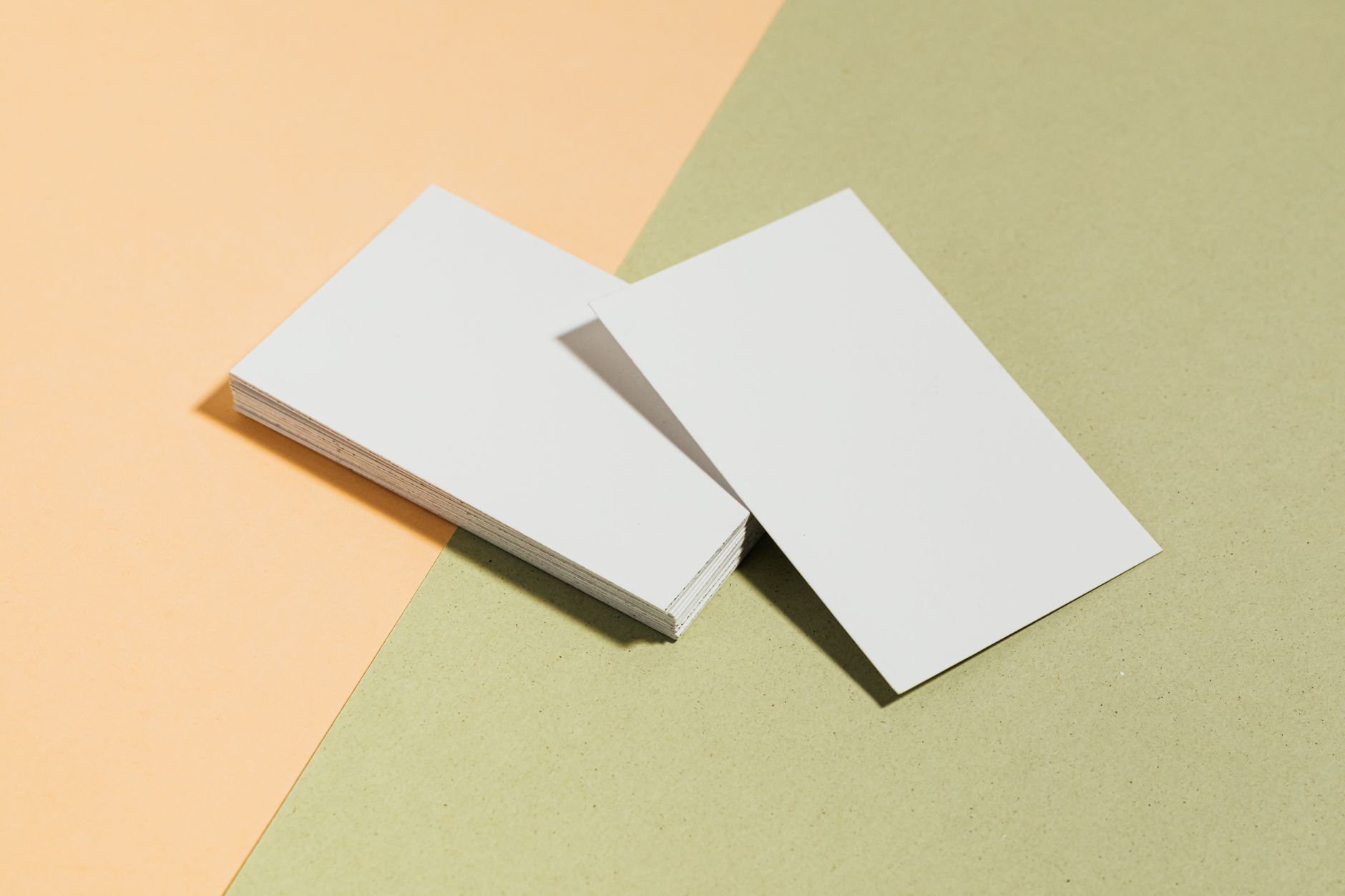
Colour on paper is not colour on screen
A brand gold that looks rich on a phone can print brown on uncoated paper, and a deep black can print grey if it is built from black ink alone. Part of stationery and print design is translating the brand colours for paper: CMYK values for digital and offset print, a rich black for large dark areas, and a Pantone reference where a printer can match a spot colour.
For gold, ink is rarely the best answer. Metallic inks dull quickly and look flat next to real metal, so for business cards, folders and premium covers we specify hot-foil stamping, and keep a flat gold value for documents printed in the office.
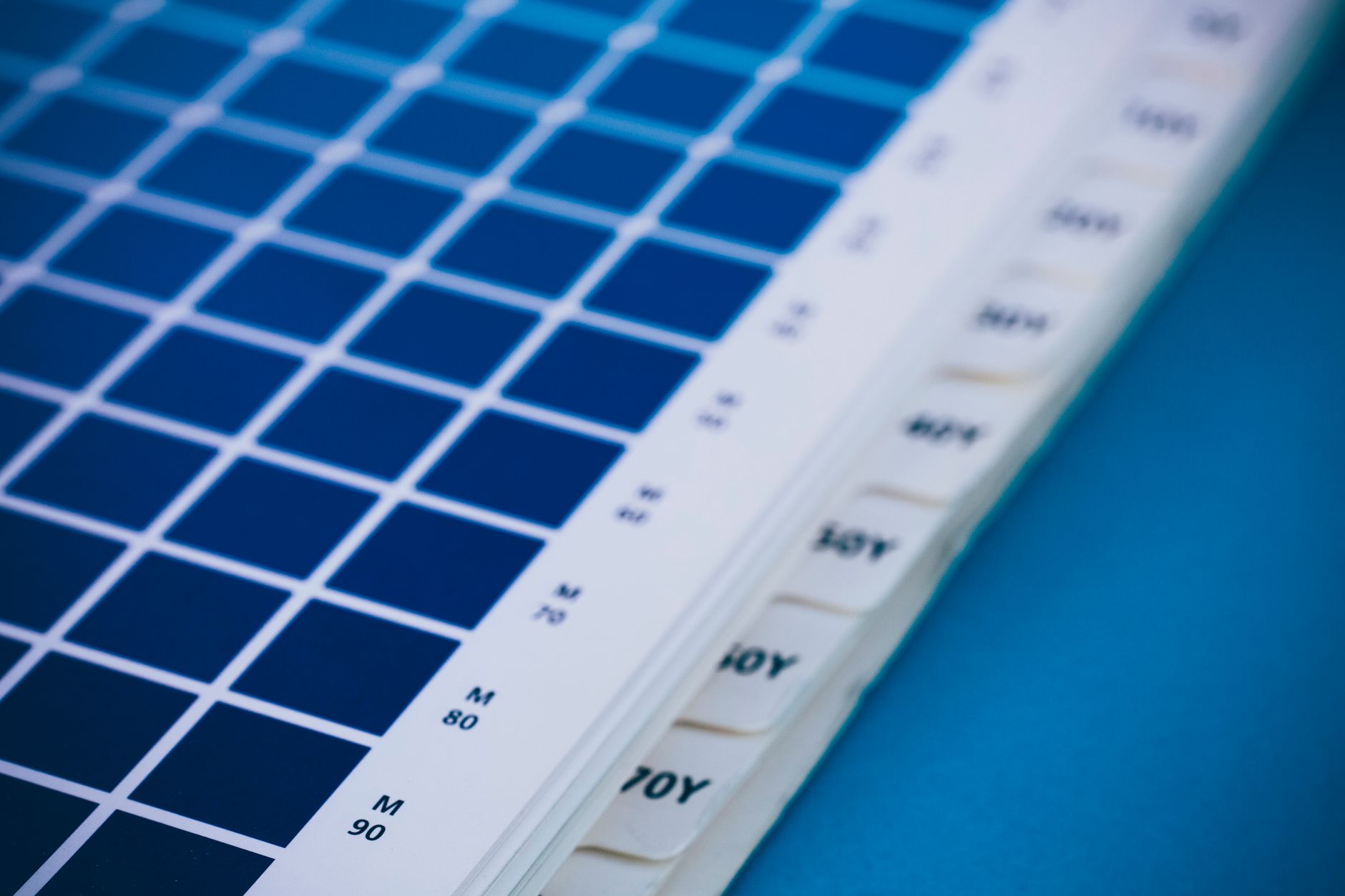
Paper and finishes that match the brand
The same design feels different on different paper. Letterheads usually work on 100–120 gsm uncoated paper that takes a pen and runs through office printers; business cards need a heavier board so they do not bend; folders need a board that holds a crease. We note the paper and weight for each piece in the print guide, so the second printer orders the same stock as the first.
Finishes are used sparingly and on purpose: gold foil for the logo, blind embossing for a monogram, spot UV for a detail that should catch the light. Each finish needs its own artwork layer, which we prepare separately and label for the printer.
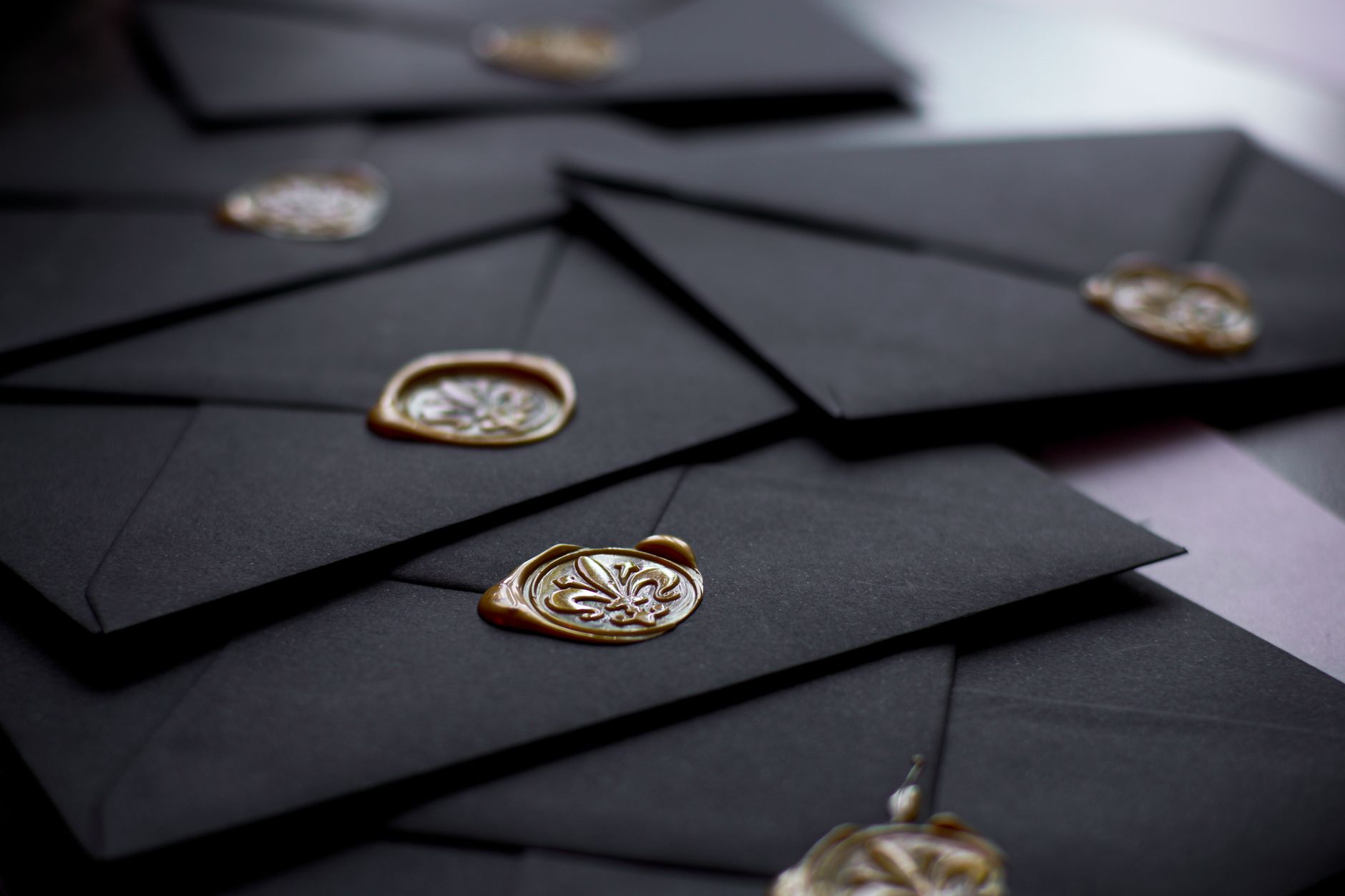
Editable templates that stay on brand
The documents an office fills in every day — letterheads, invoices, vouchers — are delivered as Word or Google Docs templates. The header and footer are placed behind the page as high-resolution artwork, so typing never pushes the logo down or the footer onto a second page. Tables are kept flat, because nested tables break when a file moves between Word and Google Docs, and the font is embedded so the document looks the same on every computer.
Arabic needs particular care. An Arabic line that is only aligned to the right still behaves like an English line, which throws a percentage sign or a number to the wrong end. We set Arabic lines as real right-to-left paragraphs, so totals, VAT rows and dates read correctly.
Print-ready files and the press proof
A print-ready file is more than a PDF. It has bleed beyond the trim so no white edge appears when the sheet is cut, crop marks, text kept a safe distance from the edge, fonts embedded or outlined, images at print resolution, and colours in the printer’s colour space. We prepare each printed piece that way and check it with the printer before the run.
Before a large run we ask for a proof — printed, or the printer’s digital proof — and check colour, foil registration and paper. It is the cheapest moment to catch a mistake, and the only one before a few thousand cards carry it.
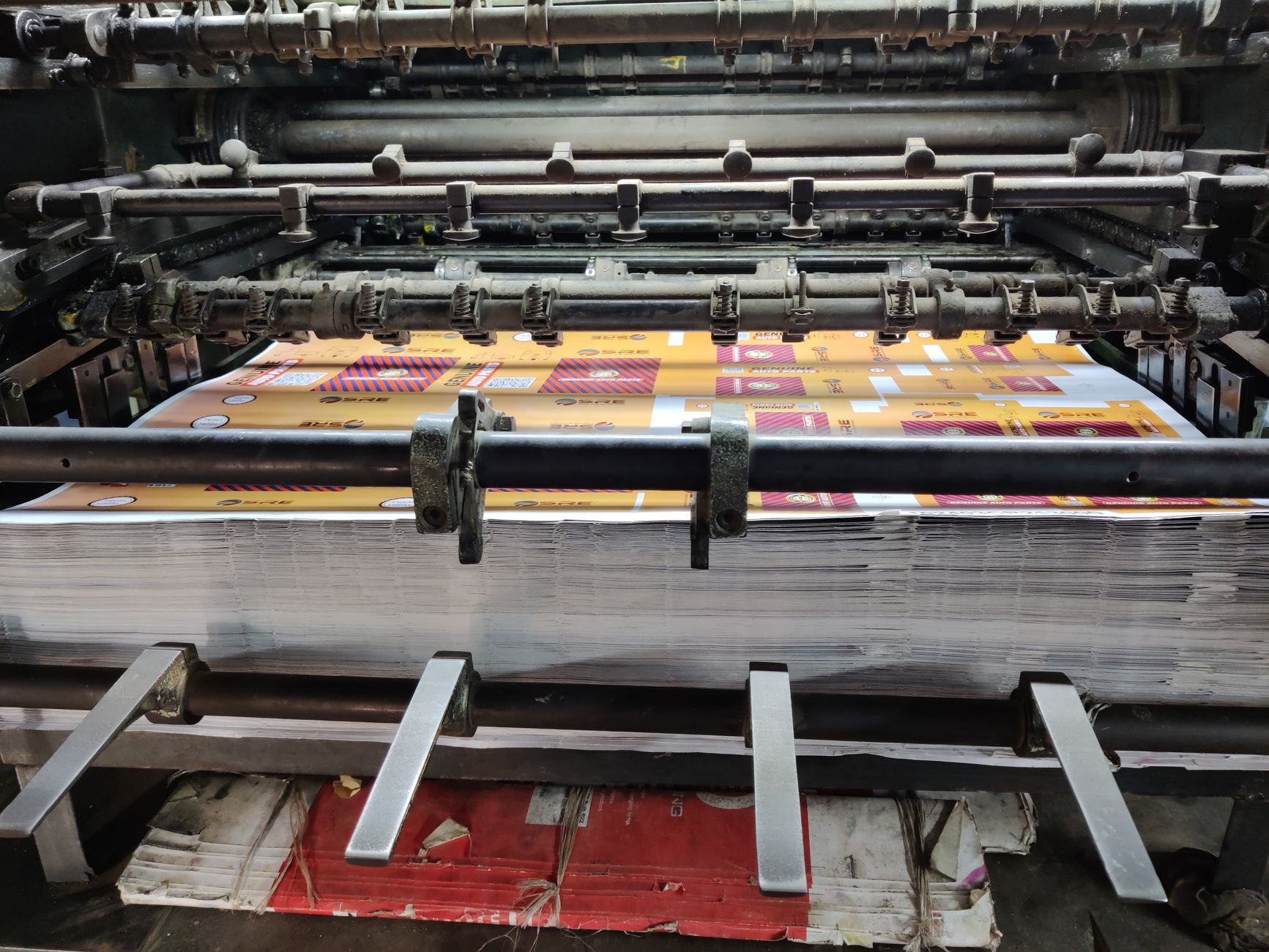
6 common print design mistakes we avoid
- Designing the business card first and finding later that the invoice does not fit the same grid.
- Using screen colours for print, so the brand gold comes back brown or the black comes back grey.
- Sending artwork without bleed, so every card has a thin white edge after cutting.
- Delivering invoices as images that the office cannot edit, so staff go back to random templates.
- Mixing two or three typefaces between Arabic and English, so a bilingual document looks like two companies.
- Leaving no written guide, so each printer reproduces the colours and paper differently.
Avoiding these is most of what good stationery and print design is: a system planned around real documents, colours translated for paper, and files that both a printer and an office can use.
Print design terms you will hear
- Bleed
- artwork extended beyond the cut line so no white edge shows after trimming.
- Crop marks
- lines showing the printer where to cut.
- CMYK
- the four process inks used in most printing.
- Spot colour
- a pre-mixed ink, often a Pantone reference, used when a colour must match exactly.
- Hot-foil stamping
- a finish that presses metallic foil into paper.
- Embossing
- raising part of the paper with a die; blind embossing has no ink.
- GSM
- paper weight in grams per square metre.
- Proof
- a test print or digital simulation approved before the full run.
Questions clients ask
Can my team edit the letterhead and invoice themselves?
Yes. Everyday documents are delivered as editable Word or Google Docs templates. The header and footer are fixed artwork behind the page, so typing never moves the logo or the footer.
Do you design stationery for a logo we already have?
Yes. We can start from your existing logo and colours and design the stationery and print range around them, with a short guide so future printing stays consistent.
Do you handle Arabic and English on the same document?
Yes. Arabic lines are set as true right-to-left paragraphs, so numbers, percentages and currency signs stay in the right place, and both languages use one type family.
Which files will the printer receive?
Print-ready PDF with bleed, crop marks and CMYK colour, plus vector logo files. For foil or embossing we supply separate artwork for each finish.
Do you print the stationery?
We design and prepare the files and check the proof with your printer of choice. We do not run presses ourselves, which keeps you free to print where it suits you.
Why choose Kenania for stationery and print design projects?
Because stationery and print design should leave you with files you can use for years: print-ready artwork for the printer, editable templates for your team, and a short guide that keeps colours and layout the same on every run. We design from Dubai and Cairo, in Arabic and English, and quote a fixed fee for a written scope.
Start a print project
Send us your logo and the list of documents you use, and get a written scope back with the stages and the fee.