AI Desk Design: How to Keep Generating Fresh Ideas
Table of Contents
Introduction
Good AI desk design ideas are rarely a flash of inspiration — they are the output of a system for collecting raw material. The eight habits below are the ones our furniture and interior team actually uses when a desk concept stalls.
Running dry on desk concepts is rarely a lack of creativity — it is usually a lack of new input. The designers who consistently produce fresh AI desk ideas are the ones who have built a habit of collecting raw material long before they need it. These are the methods our studio uses when a project needs options rather than one safe answer.
Have a project like this in mind? Message Kenania directly on WhatsApp.
Chat on WhatsApp1. Study How People Actually Use the Desk
Spend an hour watching someone work at their current desk and you will find more design problems than any brief will list. Where do they put their phone? What do they move every morning? Which drawer never opens? Real usage is the most reliable idea generator available and it costs nothing but attention.
2. Borrow From Adjacent Disciplines
Automotive interiors, aerospace cabins and product design solve the same problems desks do — clean surfaces, hidden storage, integrated electronics — usually with bigger budgets and more rigour. Looking sideways at those fields produces sharper ideas than looking at more furniture.
3. Work From Material Constraints
Constraints generate ideas faster than a blank page. Decide the desk must be made from a single sheet of ply, or must have no visible fixings, or must be assembled without tools, and the form starts designing itself. Pick an arbitrary constraint when you feel stuck and follow it honestly.
4. Look at What Competitors Ship
Reviewing what other studios are actually delivering shows where the market already is, which is as useful for knowing what to avoid as what to pursue. The goal is not imitation — it is knowing which ideas are already commoditised so you spend your effort elsewhere.
5. Keep a Reference Library
Every joint, edge detail and material combination worth remembering should end up in one searchable place. A folder of photographs you took yourself is worth more than any mood board of other people’s renders, because you already know how those details behaved in reality.
6. Revisit and Remix Old Concepts
Most studios have shelved concepts that were rejected for reasons unrelated to quality — wrong budget, wrong client, wrong year. Reviewing that archive against a new brief regularly turns up something that only needed a different context to work.
7. Talk to the People Who Build It
Fabricators know what is expensive, what is fragile and what will not survive shipping. Involving them early converts a vague concept into a buildable one and usually surfaces a better detail than the one you drew, because they have already seen it fail once.
8. Use AI as a Sketch Partner, Not a Designer
Generative tools are effective at producing volume — fifty silhouettes in a minute — and poor at judging which one belongs in a specific room for a specific client. Use them to widen the pool early, then apply your own judgement. Treating the output as a finished answer is how work starts looking generic.
Conclusion
Ideas are a supply problem, not a talent problem. Build the input habits — observation, cross-discipline reference, a real archive and honest constraints — and the shortage disappears. If you need a bespoke desk or workspace designed for your brand, see our design services or start a conversation.
Questions about cost, timing or the next step? Ask Kenania on WhatsApp.
Chat on WhatsAppWhy AI Desk Design Ideas Matter
A desk is the piece of furniture people touch every day and photograph least — which is exactly why getting it right pays off quietly over years. A well-designed desk improves posture, hides the clutter that makes an office look chaotic, and gives a workspace a point of view. That is the return on treating it as a design problem instead of a purchase.
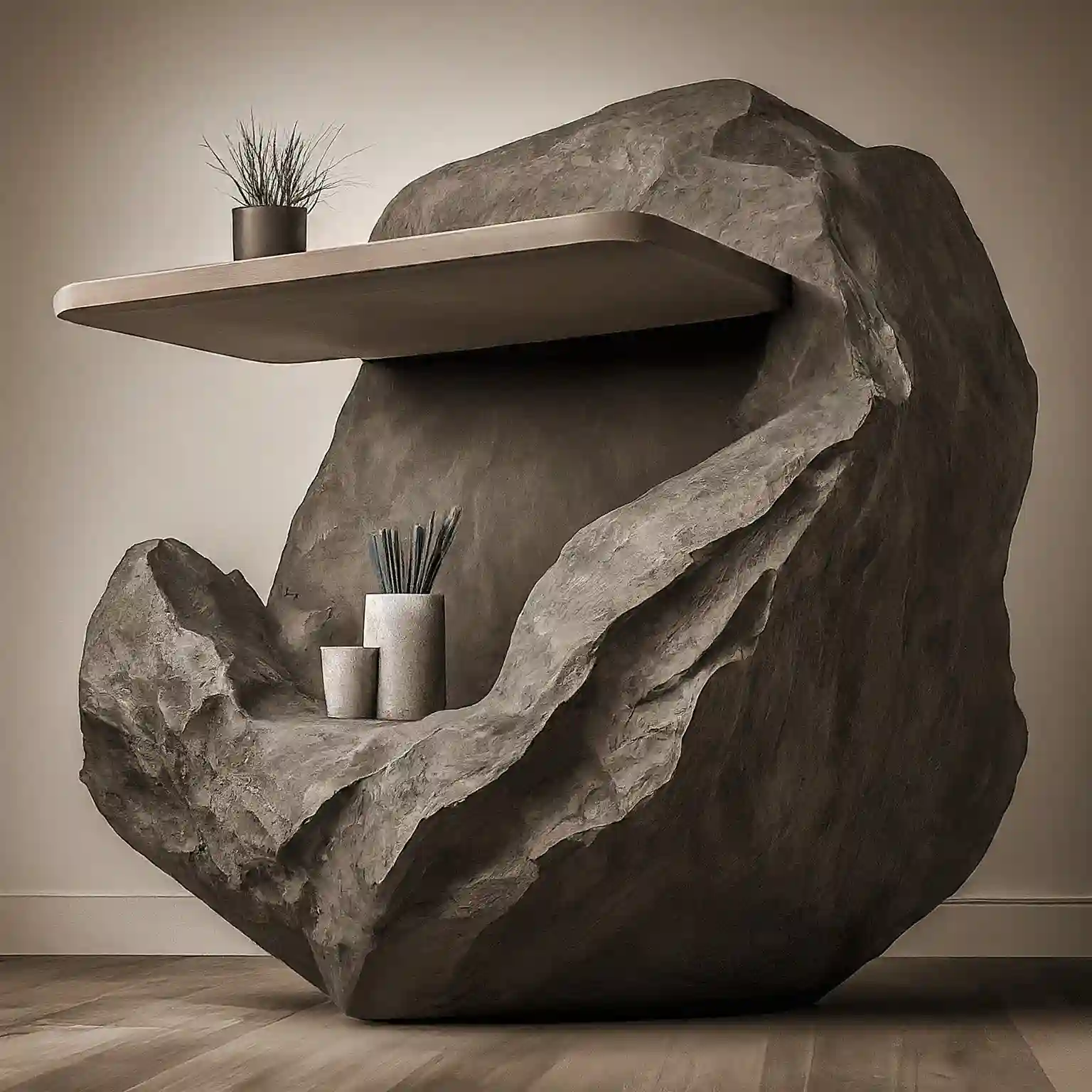
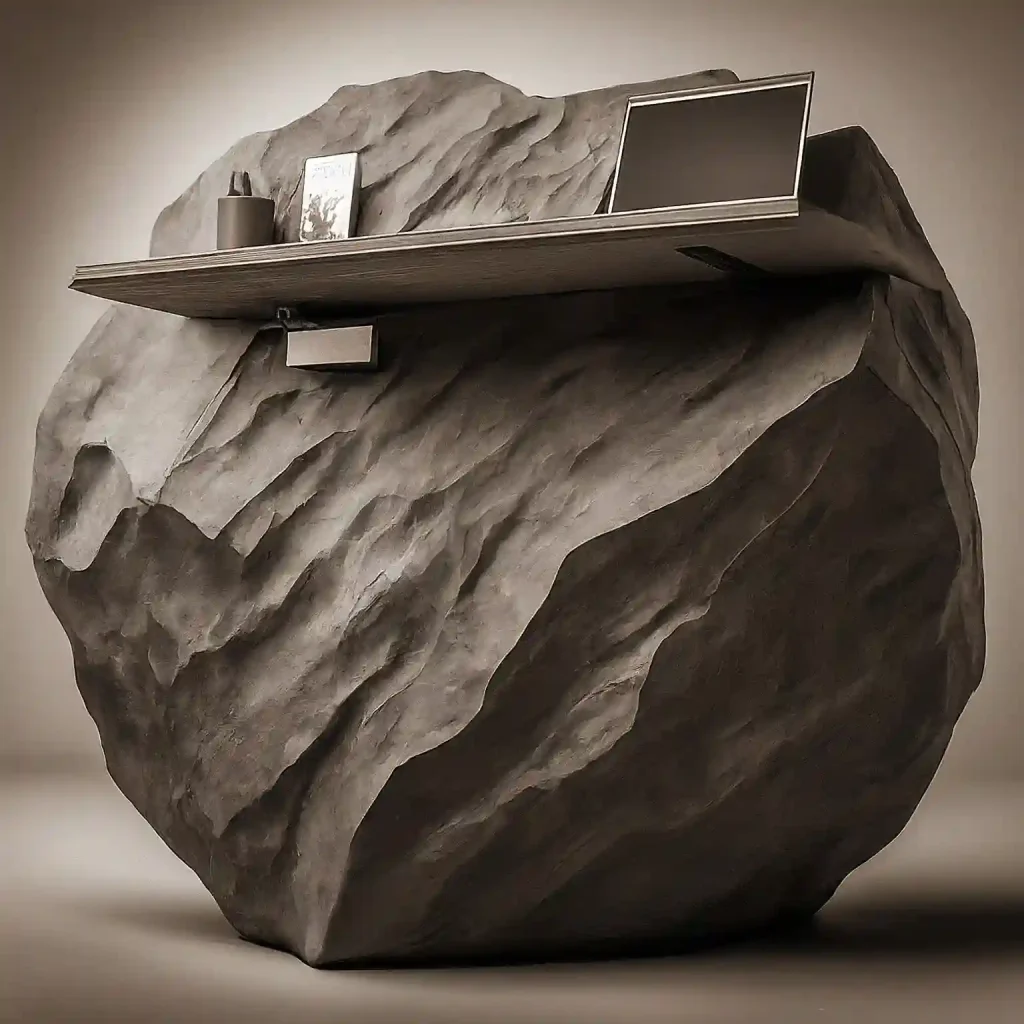
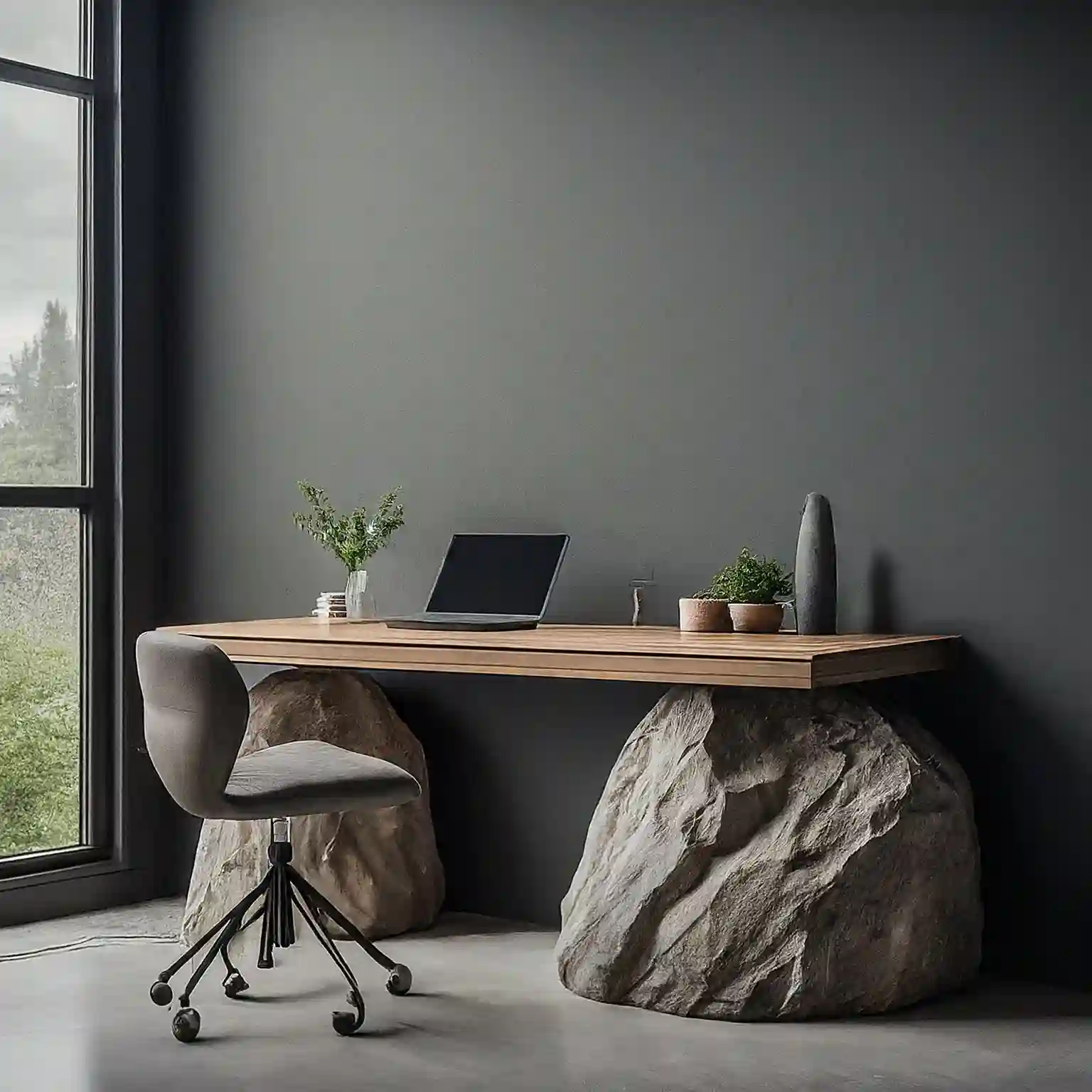
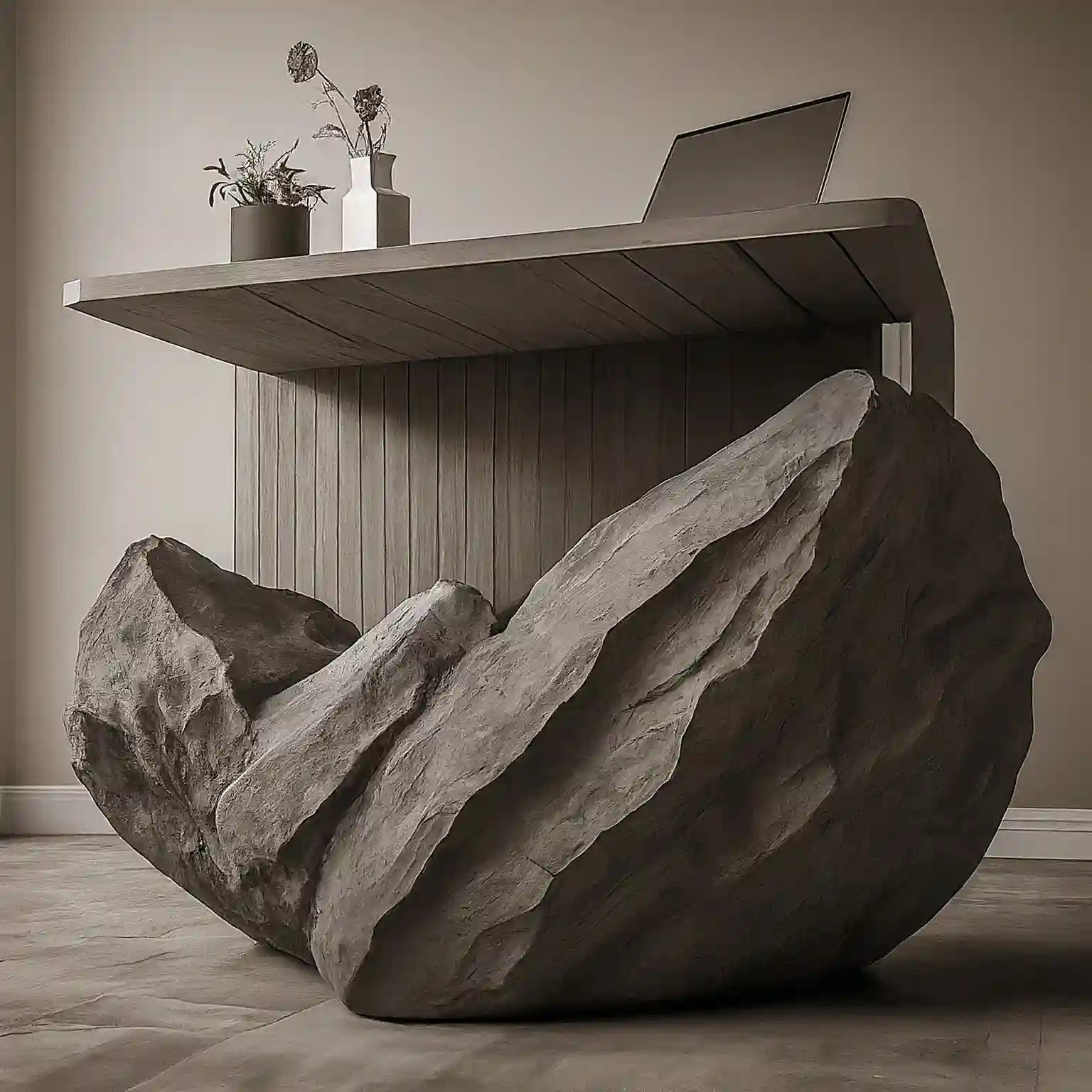
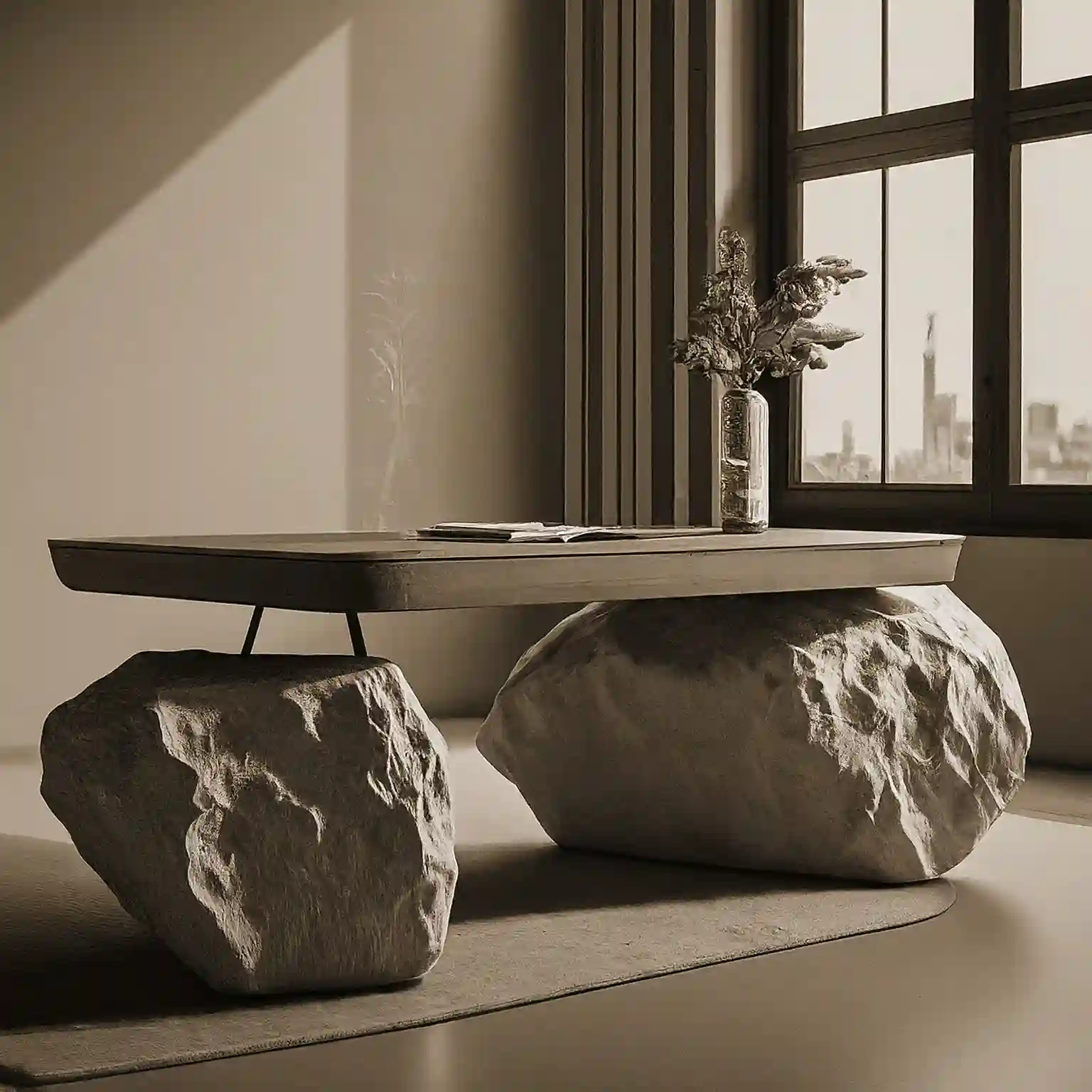
AI Desk Design Ideas — Concept Gallery
Frequently Asked Questions
Where do the best AI desk design ideas come from?
From constraint, not from a blank page. The strongest concepts we have shipped started with a fixed material, a fixed footprint or a fixed cable route — something that removed options and forced a decision. Nielsen Norman Group makes the same point about interfaces, and it holds for furniture.
Can AI tools design a desk on their own?
No. Generative tools are fast at producing silhouettes and terrible at producing buildable ones. They do not know your sheet sizes, your edge banding, or what a joiner will refuse to quote. Use them to widen the option set early, then design properly.
How do I keep desk concepts from all looking the same?
Change the input, not the software. Sketch from a different discipline for a week — automotive interiors, instrument cases, stage sets — and the vocabulary shifts on its own. That is habit two above, and it is the one that works fastest.
Keep reading
- How to Design an AI-Inspired Office Desk — the full design method
- AI-Powered Wood Sculpting — how these forms actually get made
- Interior Design Trends 2026 — where office interiors are heading
Related reading
- Office fit-out design that still works in year three — fitting a desk programme into a real office
- What a brand identity package should actually contain — the identity system a product like this should express
More ai desk design projects and services
More ai desk design work from Kenania, and the services behind it:
- How we use AI in interior design
- Interior design trends 2026
- Architecture and interior design services
Reference: for the standards behind this ai desk design work, see Stanford AI Index.
Ready to start? Send Kenania a photo, a plan or a short brief on WhatsApp.
Chat on WhatsApp