Residential Complex in Jeddah: Modern Architecture and Space Planning
A residential complex that Jeddah families would choose has to solve heat, privacy and parking before it solves style, and this scheme starts there.
Table of Contents
Residential Complex
Location: Jeddah, Saudi ArabiaYear: 2022
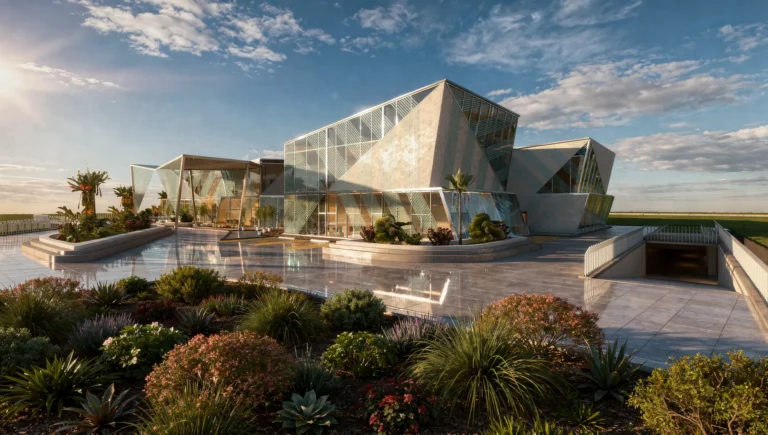
Kenania Inventive Arts designed this residential complex in Jeddah, Saudi Arabia, balancing modern architecture with practical space planning across every unit.
Have a project like this in mind? Message Kenania directly on WhatsApp.
Chat on WhatsAppThe Design Vision
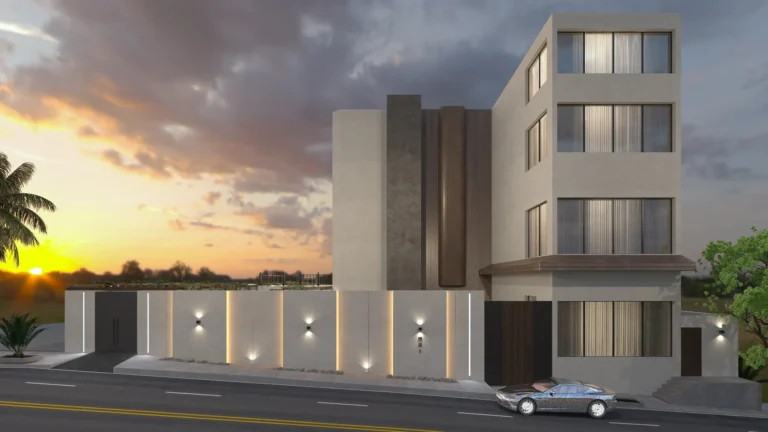
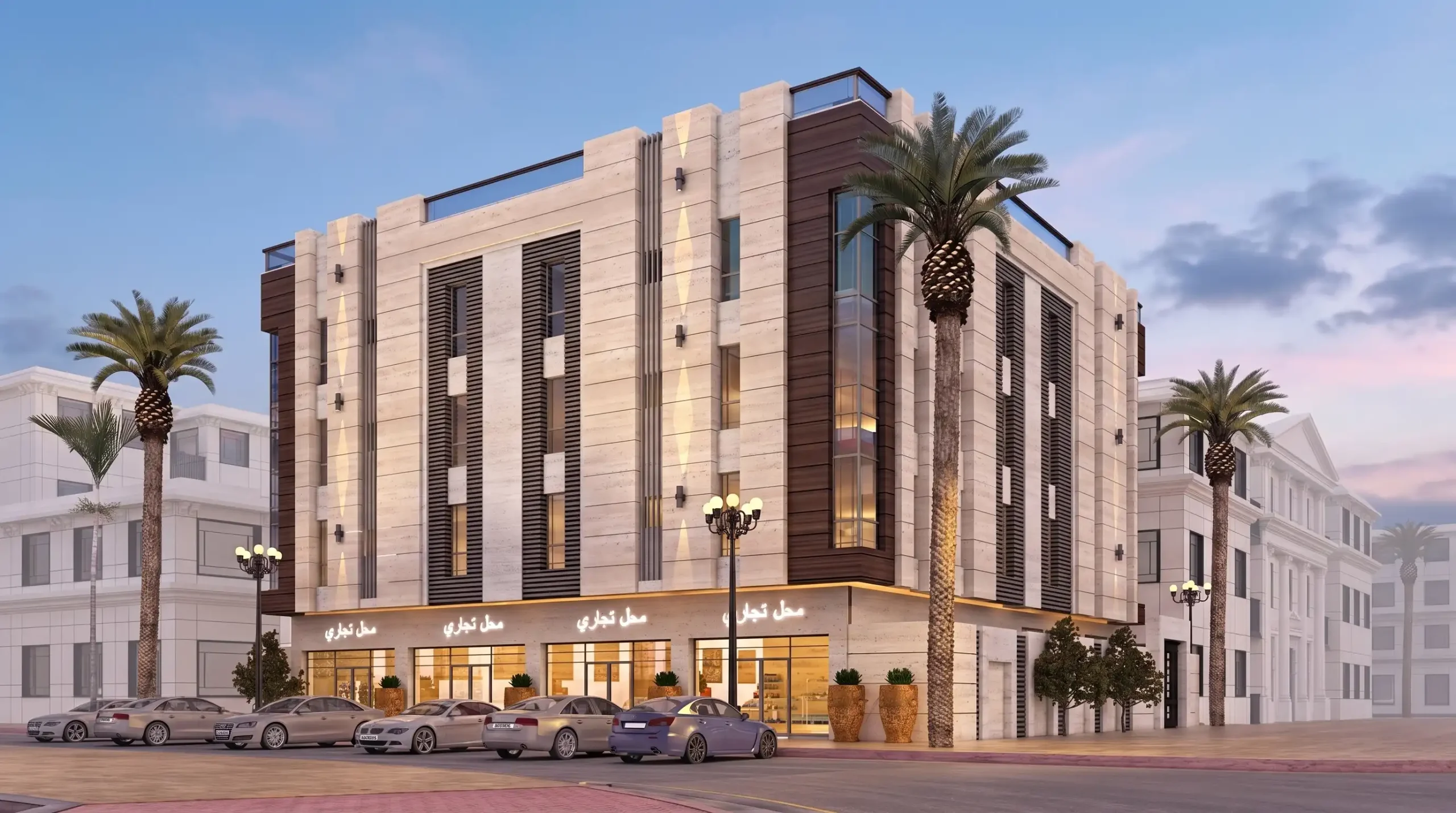
Every elevation, balcony and window opening was positioned to bring in daylight while keeping residents’ privacy. The facade keeps to a restrained palette of stone, glass and render.
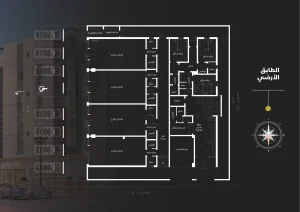
Space Planning & Layout
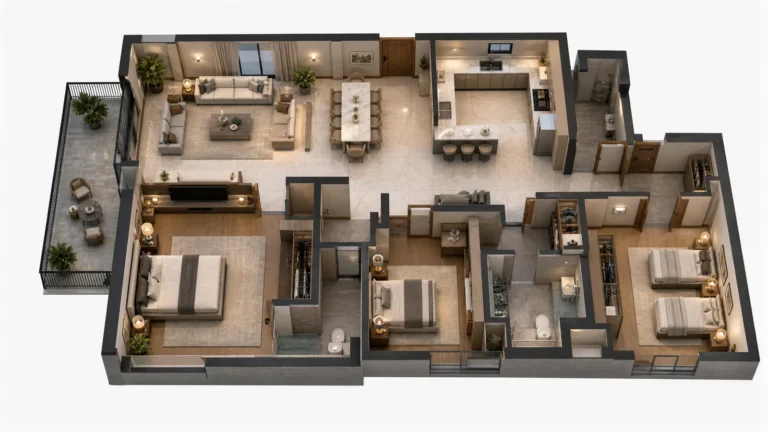
Space planning was central to this project. Each unit was designed with:
- Open-plan living areas that run into the dining and kitchen zones
- Bedrooms positioned for privacy and natural ventilation
- Generous balcony spaces that extend the living area outdoors
- Circulation paths that minimize wasted square footage
Exterior Architecture
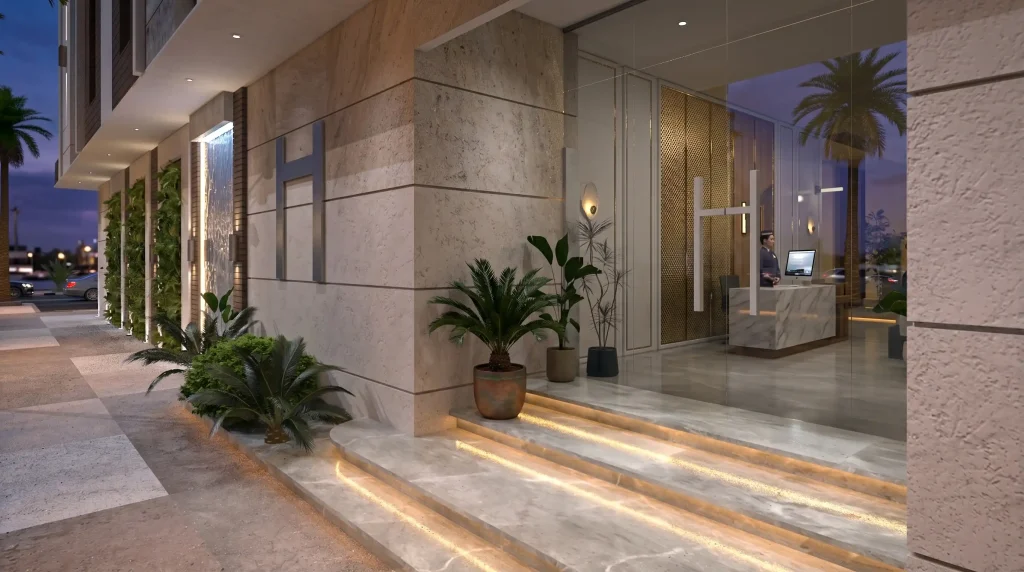
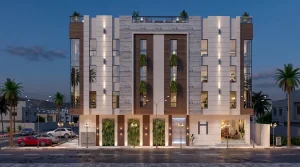
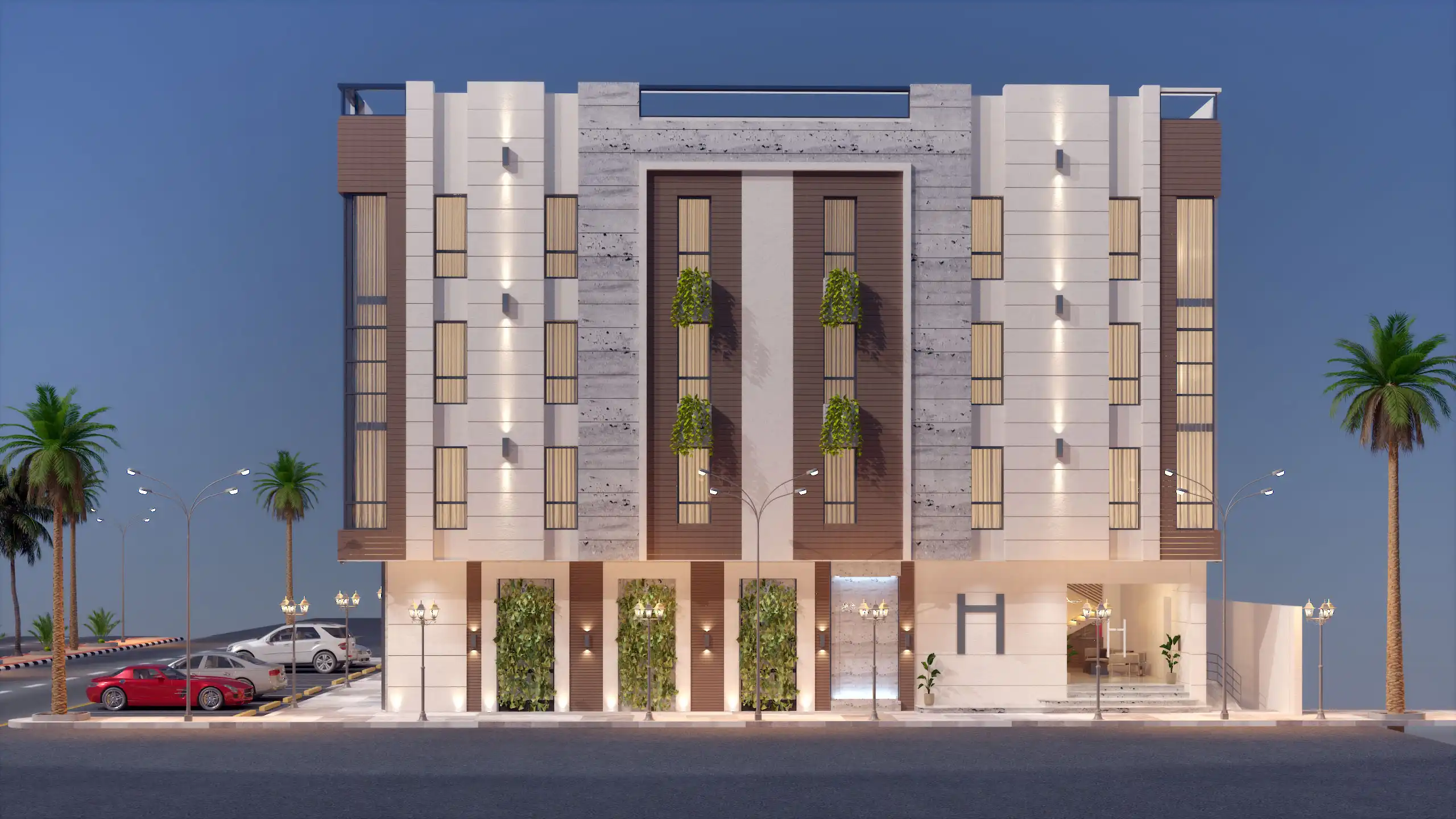
The exterior design emphasizes horizontal lines, rhythm, and proportion. Recessed balconies create shadow play across the facade throughout the day, while the rooftop massing is kept in proportion with the street. The entrance lobby marks the step from the street into the private building.
Questions about cost, timing or the next step? Ask Kenania on WhatsApp.
Chat on WhatsAppProject Highlights
| Location | Jeddah, Saudi Arabia |
| Type | Residential Complex |
| Services | Architecture Design, Space Planning, Exterior Design |
| Style | Modern Contemporary |
| Status | Completed |
Facade design lessons from the Jeddah complex
The elevations of this complex were drawn from the apartment plans outward. These are the facade decisions that matter most on a residential building in Saudi Arabia, and how they shaped this one.
The elevation is the unit plan, seen from outside
The fastest way to get an ugly apartment block is to design the elevation as a composition and then push the plans behind it. Windows land in bathrooms. A bedroom gets a full-height opening it cannot use. A structural column arrives in the middle of a feature panel and has to be hidden.
Work the other way. Fix the unit plan, mark where the living rooms and the bedrooms hit the perimeter, mark where the service cores and shafts hit it, and let the facade express that difference. Where the plan puts a service wall, keep the wall solid. Where it puts a living room, that is the opening that can afford to be generous. The elevation then explains the building instead of disguising it, which is why we resolve plans and space planning before spending a day on elevation studies.
Depth is shading, not decoration
A balcony that is too shallow to sit on is a maintenance item pretending to be an amenity. If it cannot hold a chair and a table with the door open, it will end up holding a mop bucket and a condenser, and the render will never match the building.
The useful move on a west or south-west elevation in Jeddah is depth. Recess the window into the wall, run the reveal deep, and the wall shades the glass for most of the day at no running cost. Screens do the same job where the reveal cannot go deeper. Specify them as fixed elements sized to the sun angle, not as a decorative pattern applied evenly across every face of the building.
Window-to-wall ratio is the number that decides the bill
Clients ask for more glass. Tenants ask for lower bills. Those two requests fight each other, and on a residential block the tenant pays the cooling bill every month for the life of the building while the glass impresses buyers once.
Set a target ratio per orientation, not one number for the whole building. North can carry more glass. West should carry less, and what it carries should be shaded and specified with a serious solar control coating. Tall narrow openings usually beat wide short ones here: they push daylight deeper into the apartment for the same area of glass, and they are easier to shade with a deep reveal. Where the client wants a glazed statement, put it on the stair or the lobby, where nobody is trying to sleep.
Breaking up a long facade without gimmicks
A flat plane of repeated identical windows looks institutional. The usual reaction is to scatter colours or tilt something, which ages badly and costs money in details nobody can build. The moves that survive contact with a contractor are duller than that.
- Push and pull the plane. Even a shallow setback between bays throws a real shadow line that changes across the day.
- Change material at a joint that already exists, not in the middle of a panel. On the Jeddah elevation the timber-toned bands mark the vertical bays and stop where the bay stops.
- Give the building a centre. One taller or deeper element in the middle lets the eye rest, so the repetition either side reads as rhythm instead of monotony.
Limit the palette to two claddings and one accent. Three materials on a residential block is usually already one too many once you price the junctions.
The ground floor is the part everyone actually touches
Nobody touches the fourth floor. Every resident touches the entrance twice a day, and every visitor forms an opinion of the building while standing at the door. Spend there.
The entrance needs shade over the threshold, a step edge you can see at night, a door wide enough for furniture on moving day, and a hard-wearing floor at the transition where sand comes in. Keep the lobby visible from the street through glass so it feels safe after dark.
Where the ground floor carries retail, keep the shopfront on the same structural grid as the apartments above, and design the sign zone into the facade. If you do not give tenants a defined band with a size and a mounting detail, they will invent one, and it will be a vinyl banner across your stone.
Parapet, roof plant and the line against the sky
The top edge is where most residential blocks fall apart. Condensers, water tanks, satellite dishes and stair overruns turn up after the render was approved.
Ask the MEP engineer for the roof equipment layout early, then set the parapet height so it screens the tallest unit from the opposite pavement, not from a drone. Give condensers a louvred enclosure with real airflow rather than a solid box that cooks them. Apply the same discipline to the apartments: a wall-mounted condenser position detailed into the facade beats units bolted on wherever the installer reached.
Material and colour under the Jeddah sun
Light stone and off-white panels are the local default for a good reason: they stay cooler and they age more gracefully than a saturated colour, which fades unevenly on the sun-facing elevations within a few seasons. Coastal Jeddah adds salt, so fixings, brackets and any exposed metal need to be specified for that, and the substitution the contractor proposes at tender is exactly the item to check.
Detail for dirt. Every horizontal ledge collects dust and then streaks the wall below at the first rain. Throw water off the face with a drip, keep the joints between panels consistent, and assume the wall will be washed rather than repainted. Timber tones on the exterior should be a composite or a treated system with a stated maintenance cycle, not natural timber that will grey.
Apartments are not a villa
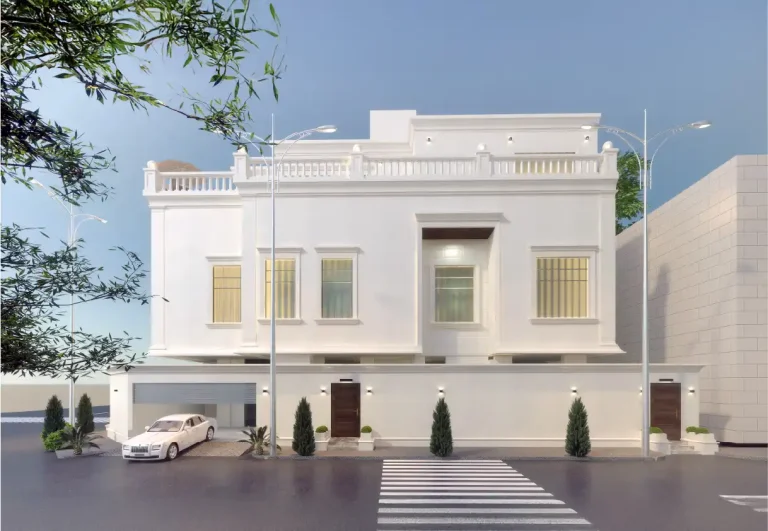
A villa facade answers to one family, one budget and one taste. It can carry ornament because one owner maintains it. Compare the detail on a neo-classical villa facade with what a multi-storey block can sustain and the difference is upkeep and repetition more than style.
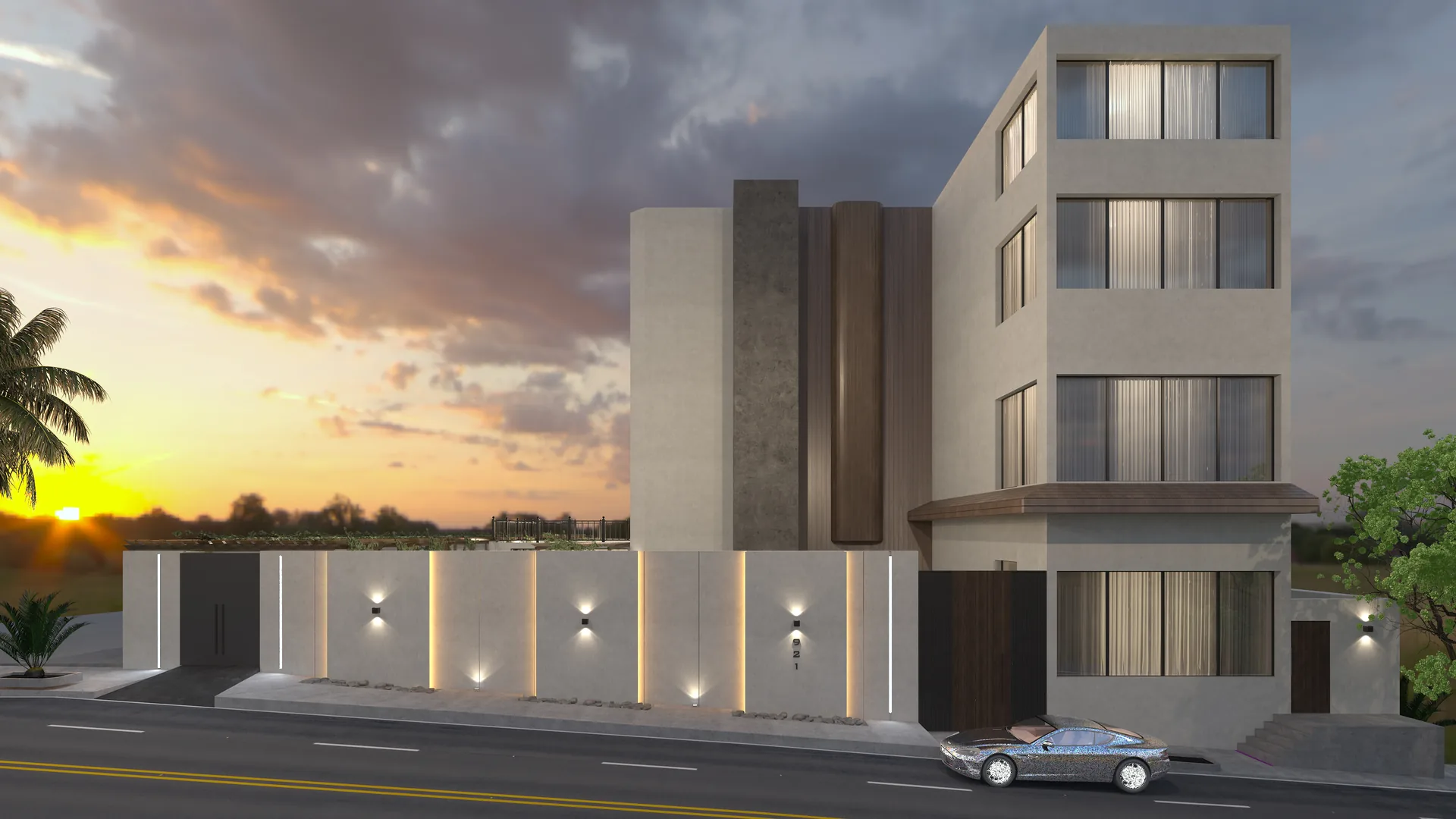
On an apartment building every detail repeats dozens of times, so a moulding that costs a little too much becomes a line item that kills the budget. Privacy also changes: units overlook each other and the neighbouring plot, so screens and offsets in the window positions matter more than any decorative feature. And the building has to survive residents who will hang laundry, add a dish and change a curtain. Design for that behaviour and the building still looks right in ten years.
If you are briefing a residential block in the Kingdom and want the elevation resolved against the unit plan rather than after it, our architecture and interior design team works on site or remotely. Send us the plot, the setbacks and the unit mix through our contact page and we will tell you what the facade can realistically do. We reply within a day.
More residential complex jeddah projects and services
Related work and services in Saudi Arabia:
Ready to start? Send Kenania a photo, a plan or a short brief on WhatsApp.
Chat on WhatsApp