Specifying Interior Finishes for Gulf Climate: Heat, Dust and Humidity
Interior finishes for Gulf climate conditions have to survive heat, dust and humidity that would ruin a European specification within a year.
A sample board gets reviewed indoors, under a downlight, in a cool room. The finishes on it then go and live somewhere else: behind west-facing glass, under a permanent film of fine pale dust, in air that swings between bone dry and coastal. Nothing on the board tells you which of those it will survive.
The interior is conditioned, but the loads still arrive: through the glazing, through the lobby every time the door opens, and through the weeks a building sits empty with the cooling set back. Specify as though the cooling never stops and two things catch you out — what gets in while it is running, and what happens when it is switched off. Specifying interior finishes for a Gulf climate is really a run of decisions about which failure you would rather manage.
Table of Contents
Heat and UV arrive through the glass
Direct sun shifts the colour of timber, and it shifts it unevenly, so the line where a sofa or a curtain shaded the veneer becomes permanent. That line is the defect people notice, not the tone. Give a room a full-height west window and you have two options: a species that ages in a direction you can live with, or no timber on that wall.
The more expensive failure is glue. Veneer lifting at a door edge, laminate bowing on a tall unit, an edge band peeling off a shelf: the face material is rarely the problem, the adhesive and the substrate are. Specify the bonding system and the edging, not just the finish. Then control the site. Joinery stacked in an unconditioned villa in summer, before commissioning, is joinery you have already damaged.
Have a project like this in mind? Message Kenania directly on WhatsApp.
Chat on WhatsAppHumidity, MDF and where plywood earns its cost
Moisture-resistant MDF is not waterproof MDF. It buys time against splashes and humid air, but it does not survive a slow leak or a washed floor. The failure starts at a cut edge, which swells and never comes back. By then the paint or laminate sitting on top has already gone with it.
Use the material by zone, not by room name. Vanity carcasses, the sink base, laundry units and anything standing on a floor that gets washed should be plywood, aluminium or solid polymer board. Everything else can be MDF and should be, because it paints better. Then seal the cut edges nobody sees: hinge borings, plumbing cut-outs, the panel behind the trap. That detail is what keeps the vanity flat.
Dust is what decides texture and sheen
Dust here is fine, pale and abrasive, and it does not stop. Deep texture holds it. Brushed stone, open-pore timber, fluted panels and heavy plaster all look excellent on a mood board, and all of them turn cleaning from a wiping job into a brushing job. Fluted panelling behind a bed is fine. Fluted panelling in an entrance corridor is a decision to buy a soft brush and keep using it.
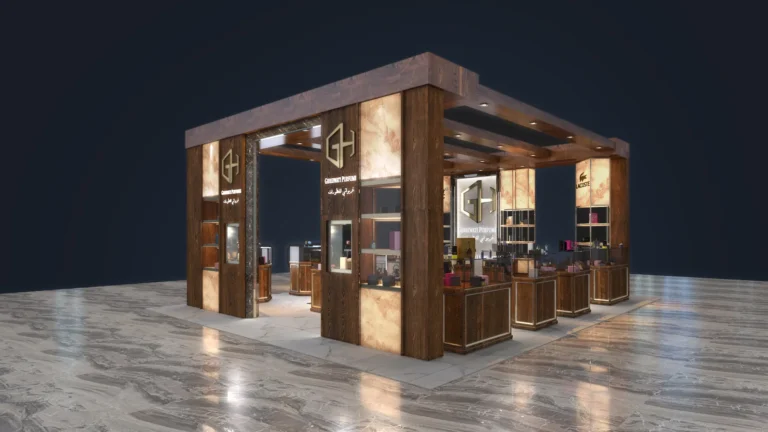
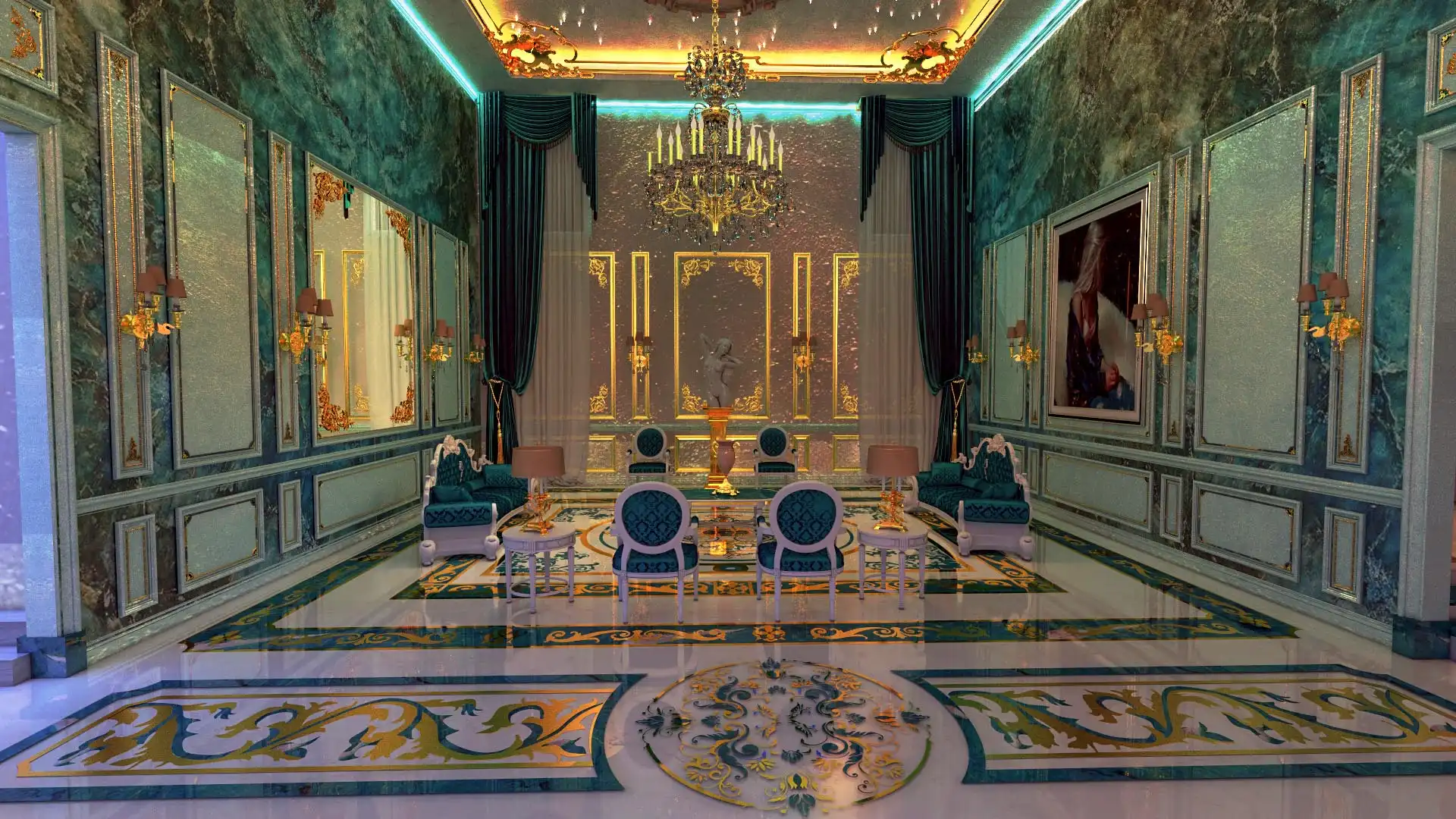
Sheen is the same argument from the other side. High gloss shows every wipe mark and water spot; dark matte shows the dust film itself. Mid-sheen in mid tones hides the most, which is part of why those palettes run through our notes on interior design trends 2026. Entrances take the worst of it, which is why sheen is the argument to have early on a job like these reception interiors in Dubai.
Stone, sealing and the polished-versus-honed decision
Polished stone is a grit problem. Sand tracked in from outside is harder than the polish, and the traffic line from door to seating dulls before anything else in the room. Honed stone hides that wear but is more open, so it stains more readily and depends on its sealer being maintained. No finish solves both. Choose which failure you would rather manage, and put a walk-off zone at every external door either way.
Sealing is a schedule, not an event. Ask the supplier for the sealer type and the re-application interval in writing, and put both in the handover file. Stone whose owner never receives that page is effectively unsealed from the day the cleaners arrive with the wrong product. Inlay floors deserve their own line: a medallion cut from several stones is a set of joints, and those stones wear at different rates, as in the neo-classical villa interiors in Kuala Lumpur.

Metal finishes and coastal air
Mirror-polished stainless shows fingerprints and water spots on day one, but grade matters more: standard stainless pits near openings, pools and terraces, and marine grade belongs anywhere the metal sees outside air. Electroplated brass wears through exactly where a hand touches it. Lacquered brass fails in patches, and patchy lacquer looks worse than a metal left to patina on purpose.
PVD-coated stainless is the durable answer for most handles and trims. Powder-coated aluminium is reliable in the field and vulnerable at cut edges and fixings, which is where corrosion starts on thresholds and anything that continues to the outside, the same exposure problem covered in our notes on neo-classical villa facades.
Questions about cost, timing or the next step? Ask Kenania on WhatsApp.
Chat on WhatsAppFabric and leather under strong daylight
Anything sitting in direct sun should be solution-dyed rather than surface-dyed, or it will fade in the shape of the window. Leather near glazing dries and hardens, and a pigmented finish survives that far better than a delicate aniline. Curtain linings are the cheapest protection in the room. Order spare fabric with the original order, from the same dye lot, and store it with the client. Reorder later and you get a close match, which on one chair in a set is obvious.
Grout, silicone and the details that fail first
Nobody looks at the shower silicone at sign-off. It is the first thing photographed and sent back to you. Wet areas, pool surrounds and floors washed daily want epoxy grout rather than cement, and a sanitary-grade sealant with stated mould performance. Movement joints need to be drawn, not left to the tiler. The floor-to-skirting junction, the door threshold, the transition strip between materials, the point where a pipe penetrates cladding: that is where a schedule gets tested.
What the schedule has to say before anyone signs it
- Named substrate for every wet-area item, not a general note
- Adhesive and edge banding specified, not “as per manufacturer”
- A sheen level written against every painted and lacquered surface
- Stone finish, sealer product and re-sealing interval, in writing
- Metal grade and coating type per item, marine grade near outside air
- Solution-dyed fabric in direct sun, plus spare metres from the same dye lot
- Grout and sealant type set by zone, movement joints drawn
- A cleaning line per finish: which product, and which product is forbidden
- Storage conditions for joinery before the air conditioning is commissioned
- A named replacement source for every specialty item
Most of that costs nothing at specification stage and a great deal in year two. A schedule that is a list of pretty names with no substrate, no sheen and no maintenance column is not finished, whatever the deadline says. A proper architecture and interior design package carries that level of detail.
Send yours through our contact page if you want a second opinion on what will survive the climate it is going into. We reply within a day, and we work remotely, so the site can be anywhere.
More interior finishes for gulf climate projects and services
More interior finishes for gulf climate work from Kenania, and the services behind it. Every interior finishes for gulf climate project we publish carries its drawings, so the reasoning behind each interior finishes for gulf climate decision can be checked:
Reference: for the standards behind this interior finishes for gulf climate work, see Dubai Municipality.
Planning a interior finishes for gulf climate project of your own? Send the plan and a short brief and we will reply with a scoped proposal.
Ready to start? Send Kenania a photo, a plan or a short brief on WhatsApp.
Chat on WhatsApp