How to Design an AI-Inspired Office Desk: Branding & Interior Tips
Table of Contents
Designing an AI-Inspired Office Desk
AI-inspired office desk design is not a desk with a screen bolted to it. It is furniture whose form, material and proportion tell a visitor what the company builds. Below is the eight-step method we use at Kenania when a client asks for exactly that.
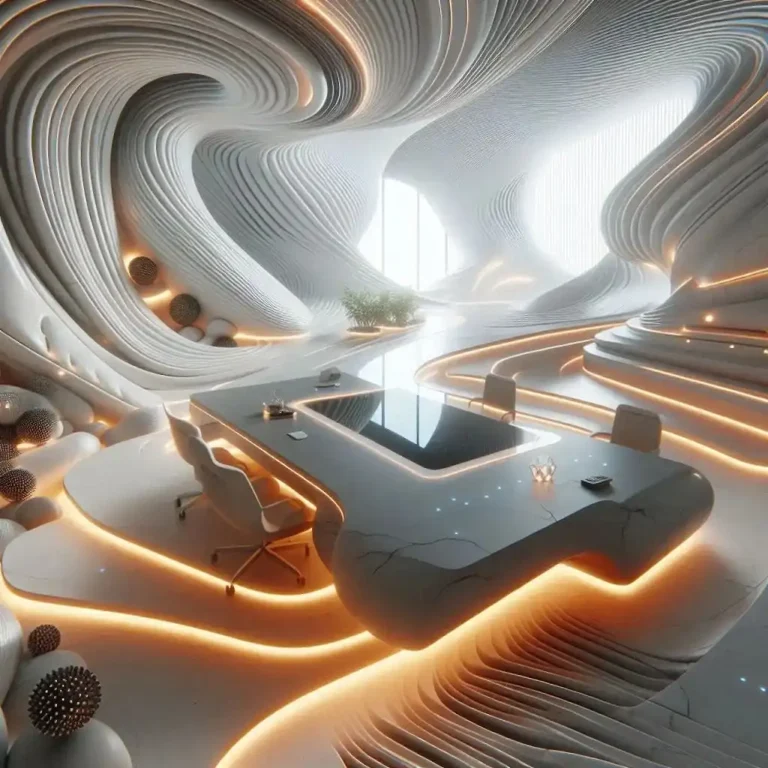
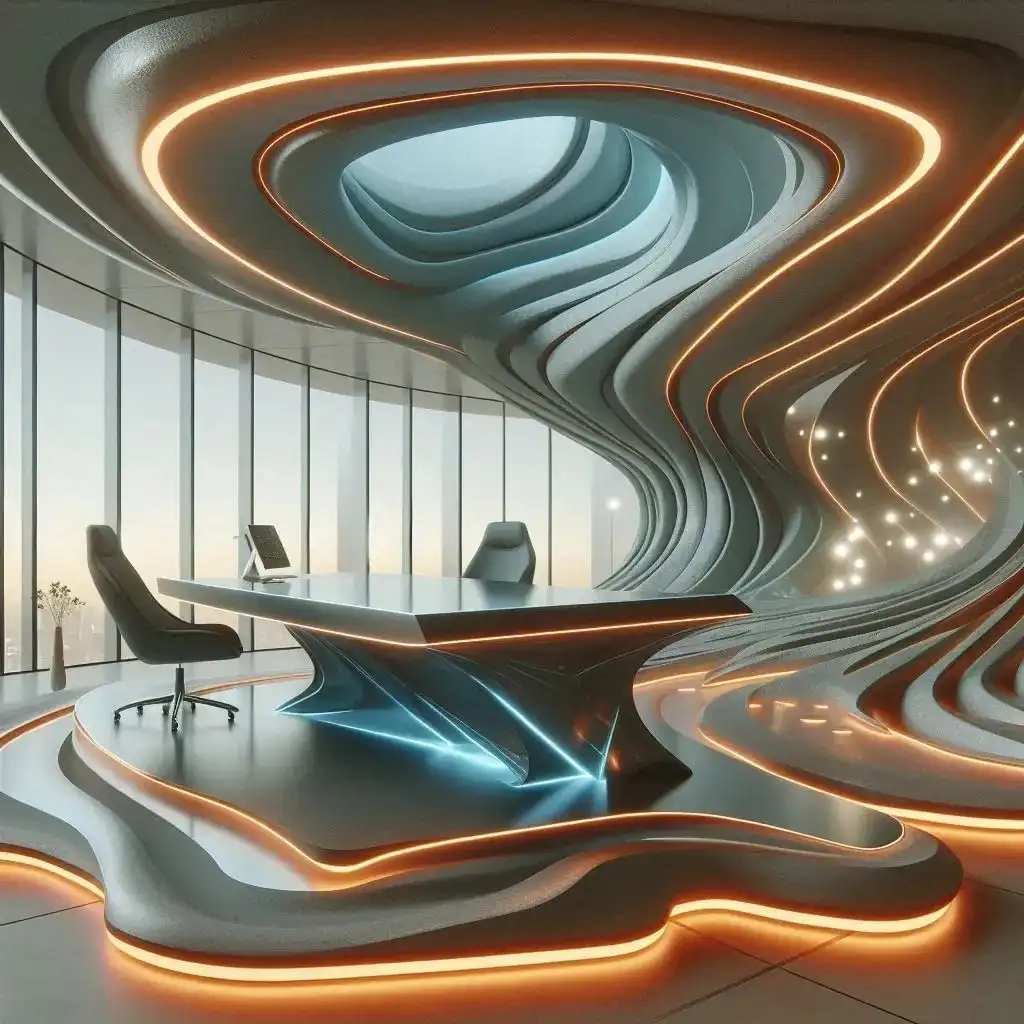
An AI-inspired desk is not a desk with a screen bolted to it. It is a piece of furniture whose form, materials and proportions communicate that the people working at it build forward-looking things. At Kenania we treat these desks as brand objects first and furniture second, because in a studio or a reception area the desk is often the first thing a visitor reads about the company.
Have a project like this in mind? Message Kenania directly on WhatsApp.
Chat on WhatsApp1. Start With the Brand, Not the Furniture
Before sketching a single line, define what the desk has to say. A research lab and a creative agency both want to look innovative, but one needs to read as precise and clinical while the other needs to read as expressive. Pull the shapes, colours and materials from the existing brand identity so the desk extends it rather than competes with it.
2. Let the Silhouette Do the Talking
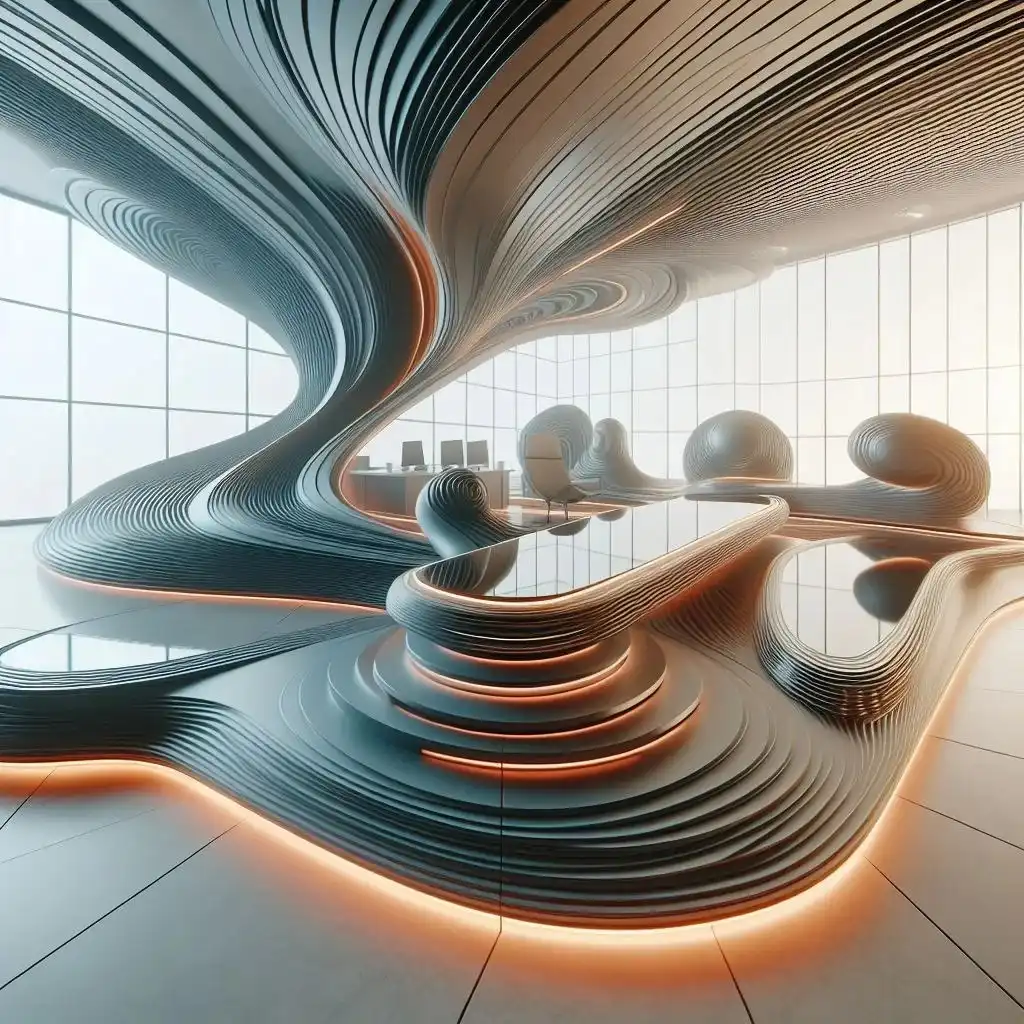
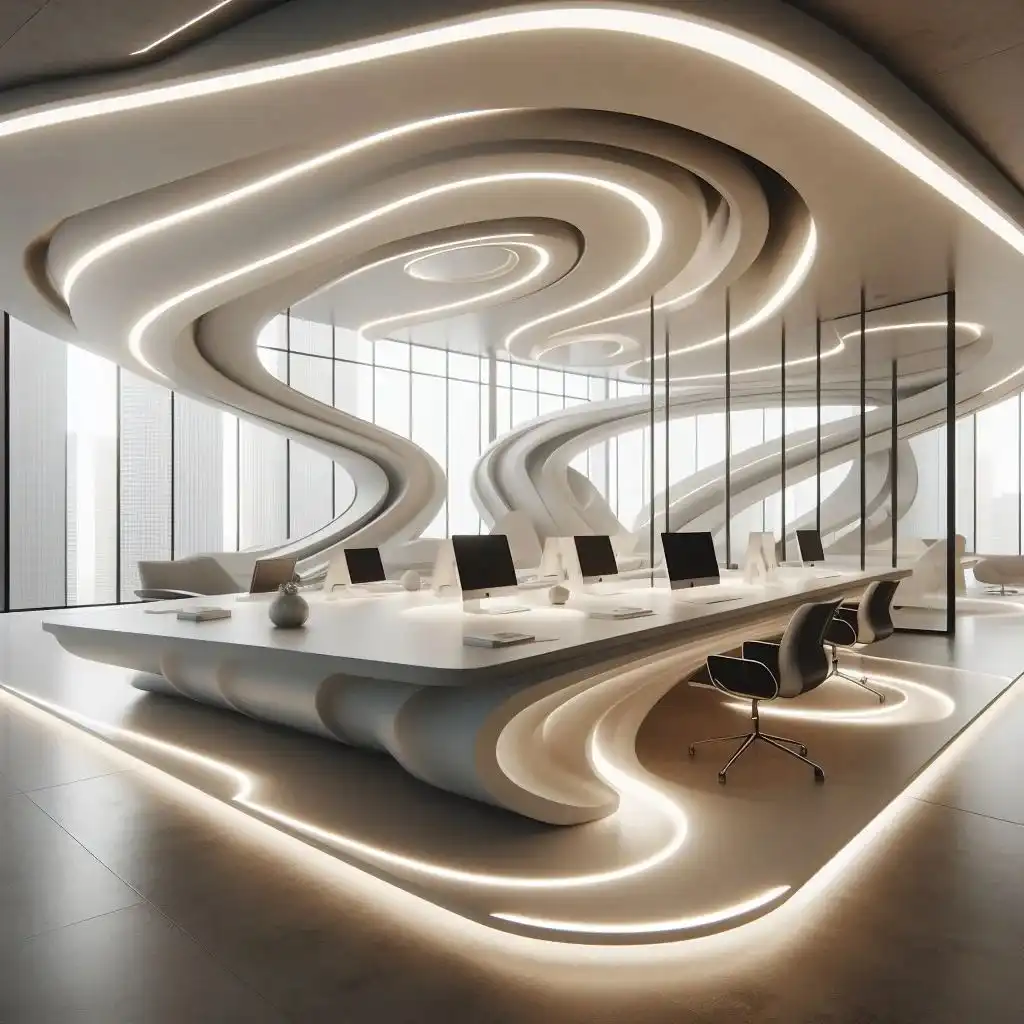
The strongest AI-inspired desks are recognisable in outline alone. Continuous curves, cantilevered surfaces and seamless joins suggest computation and flow far better than any applied graphic. Keep the profile clean enough that it still reads well in a photograph taken from across the room.
3. Choose Materials That Signal Innovation
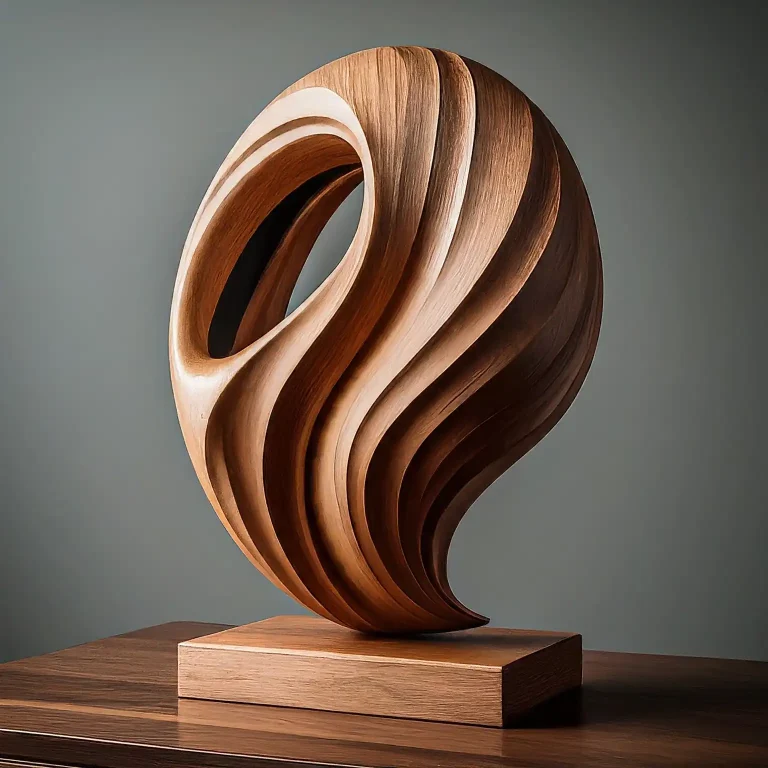
Solid timber with a CNC-carved face, matte composite surfaces, powder-coated steel and micro-textured laminates all photograph well and age well. Avoid high-gloss finishes on large horizontal planes: they show every fingerprint and they date quickly. Mixing one warm material with one engineered material usually reads as more considered than using either alone.
4. Design Around Cables and Devices From Day One
Nothing undermines a futuristic desk faster than a visible power strip. Plan the routing before the form is finalised: grommet positions, an accessible cable tray under the surface, a hidden power module within arm’s reach, and enough clearance behind for a monitor arm. Retrofitting cable management into a sculpted desk is expensive and almost always looks like an afterthought.
5. Integrate Lighting Into the Form
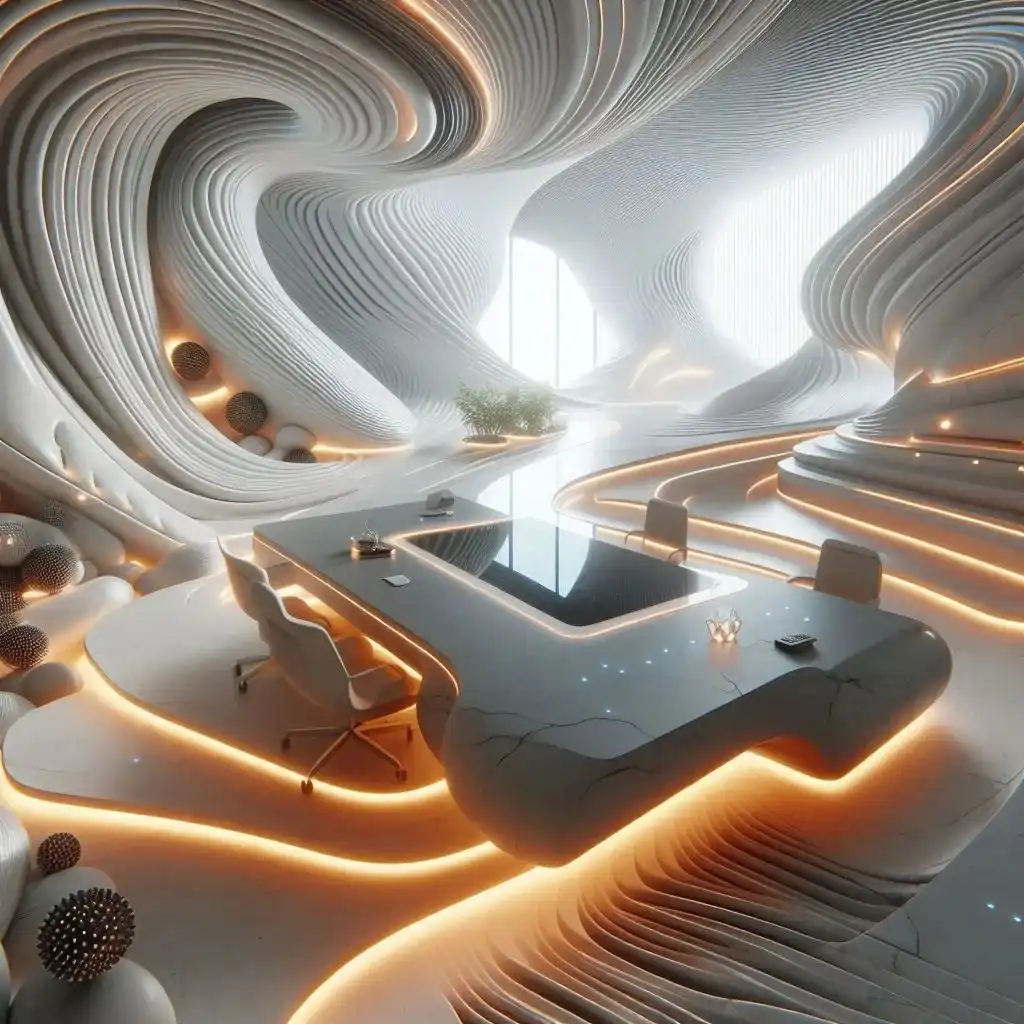
Concealed LED strips along an undercut edge or beneath a floating surface give the desk presence without glare. Keep the light source itself hidden and let it wash across a material so the texture does the work. Specify a colour temperature that matches the room — a cool strip in a warm interior looks like a mistake, not a feature.
6. Match the Desk to the Room, Not the Catalogue
A sculptural desk needs clearance to be understood. Check circulation space, sightlines from the entrance, and how the form reads against the wall behind it. In a compact office a lighter, more open base will keep the room feeling larger; in a double-height space a heavier solid mass holds its own.
7. Prototype Before You Commit
Complex curves behave differently at full scale than they do on screen. A partial mock-up in MDF, or even a full-size cardboard profile, will expose ergonomic problems and awkward proportions while they are still cheap to change. Sit at it, type at it, and check knee clearance before anything is cut in the final material.
8. Plan for Maintenance and Longevity
Specify finishes that can be repaired locally rather than replaced wholly, and keep a record of materials and suppliers for future touch-ups. A desk that looks tired after two years was not a design success no matter how well it photographed on day one.
Questions about cost, timing or the next step? Ask Kenania on WhatsApp.
Chat on WhatsAppConclusion
An AI-inspired office desk works when the engineering is invisible and the intent is obvious. Get the brand brief, the cable strategy and the material palette right early, and the sculptural form becomes the easy part. If you are planning a bespoke desk or a full office fit-out, see how we approach interior design projects or get in touch for a consultation.
Frequently Asked Questions
How much does AI-inspired office desk design cost?
The design fee tracks complexity, not size. A single sculpted reception desk with curved joinery and integrated lighting costs more to draw than six straight workstations. Fabrication is the bigger variable — solid-surface and CNC-carved timber sit well above flat-panel construction.
What materials signal innovation without looking like a prop?
Restraint reads as confidence. Solid surface or micro-cement for seamless curves, matte anodised aluminium instead of chrome, and one warm timber to stop the whole thing feeling clinical. Certified timber is worth specifying — the Forest Stewardship Council chain-of-custody label is the one procurement teams recognise.
How do you hide cables in a sculpted desk?
You decide the cable route before the silhouette is final, not after. A continuous spine channel under the top, one grommet position agreed with IT, and a removable access panel the client can actually open. Retrofitting cable management into a finished curve is where these projects go wrong.
Can Kenania design and deliver the desk remotely?
Yes. We produce the concept, the fabrication drawings and the finish schedule, then work with a local joiner on shop drawings and a prototype review. Send us your brand brief and floor plan to start.
Related reading
- AI Desk Design: How to Keep Generating Fresh Ideas — the ideation side
- AI-Powered Wood Sculpting — the fabrication method behind sculpted forms
- Interior design services — full fit-out scope
Related design guides
- Office fit-out design that still works in year three — where a desk like this sits in a wider office plan
- Space planning in interior design: how a floor plan gets decided — how the floor plan around it gets decided
- Specifying interior finishes for Gulf climate — choosing materials that survive heat, dust and humidity
More ai-inspired office desk design projects and services
More ai-inspired office desk design work from Kenania, and the services behind it:
- How we use AI in interior design
- Office fit-out design guide
- Showroom and office interior design in Dubai
Reference: for the standards behind this ai-inspired office desk design work, see Stanford AI Index.
Ready to start? Send Kenania a photo, a plan or a short brief on WhatsApp.
Chat on WhatsApp