
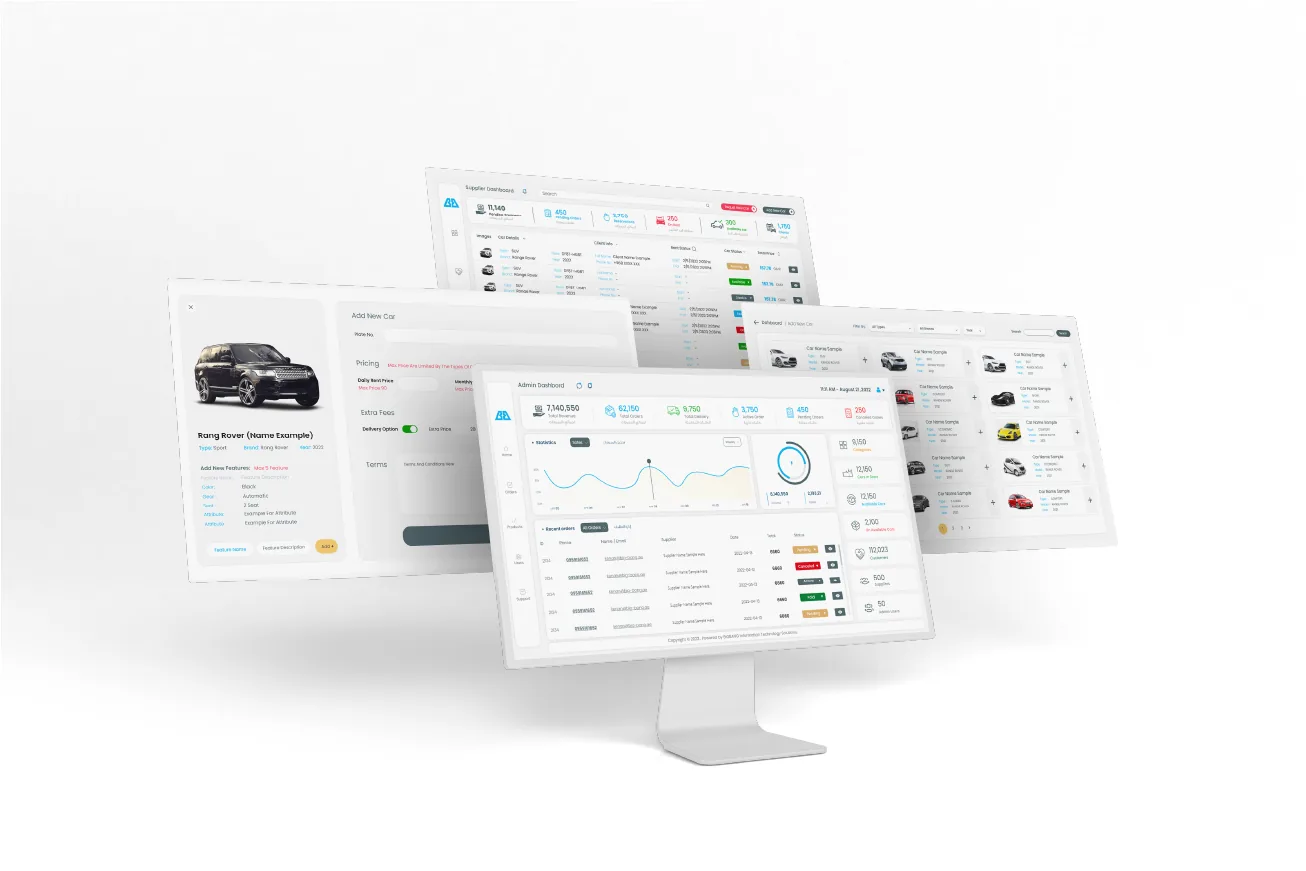
Websites · Web apps · Mobile apps · MCP
Website and App Development
Company sites, online stores, booking platforms, dashboards and mobile apps — designed and coded by one team, and delivered with an MCP server that lets you run the whole thing by talking to an AI assistant.
6
stages from brief to handover, each with a written approval
1
MCP server with every build, so AI can run your site
200+
projects delivered since the studio opened
5
bases: Dubai, New Cairo, Kuala Lumpur, Damascus, Portland
In collaboration with

Table of Contents
What website and app development should leave you with
Kenania does website and app development end to end: the design, the code, the dashboard your team will use, and — this is the part nobody else hands you — an MCP server for your site, so you can run it from an AI assistant like Claude or ChatGPT instead of clicking through an admin panel. Design and build come from one team, in Dubai, New Cairo, Kuala Lumpur, Damascus and our base in Portland, Jamaica.
Most website projects split in two: an agency draws the screens, a developer somewhere else writes the code, and the person who ends up updating the site was in neither conversation. The result is familiar — a beautiful home page, a dashboard nobody can use, and a year of small changes that each need a quotation.
We keep the three together. The same studio designs the interface, writes the code, and builds the admin your team will actually live in. Arabic is planned from the first layout rather than translated into a template at the end, and the site is handed over in your own name: your domain, your hosting, your accounts.
Then we add the part that changes how the site is run. Alongside the normal dashboard we build an MCP server for your site — the open standard that lets an AI assistant work with real systems — so publishing a page, changing a price, checking what sold last week or drafting next month’s posts can be done by asking, in Arabic or English, from Claude or ChatGPT.
MCP is the Model Context Protocol, the open standard for connecting AI assistants to real systems. We build one for your site, so the assistant works on your content and your orders through a door we control, not by guessing.
What you own at handover
- The code, in a repository in your company’s name
- The domain and hosting registered to you, with full access
- A dashboard your team can use without calling us
- An MCP server for your site, with the permissions you choose
- Written documentation and a walkthrough session
- Analytics and search tools connected and verified
- Hosting and the domain through our partner BIGBANG IT Solutions, still in your name
What we build
From a five-page company site to a platform with payments, roles and its own API. Everything below is part of website and app development delivery.
Business websites
Company sites and product catalogues in Arabic and English, built on WordPress when your team will manage the content, or in Next.js when the site needs its own back end.
Online stores
Shopify or a custom build: product data, variants, payment, shipping rules, abandoned-cart flows, and a catalogue your team can extend without a developer.
Booking and service platforms
Search, availability, reservations, payment and the operations screens behind them — the part customers never see but your staff use all day.
Dashboards and internal tools
Admin panels, roles and permissions, activity logs, reports and the exports finance keeps asking for, designed so the daily job takes three clicks instead of nine.
Mobile apps
Product design for iOS and Android, built cross-platform with the API, notifications and admin behind them, and the store listing prepared with your brand.
MCP servers and AI integration
An MCP server for your site so an assistant can publish, update, report and answer questions about your own data — with read-only or write access, scoped exactly as you decide.
Projects behind the offer
Published work from our website and app development team: Syrian food brands, a gaming e-commerce configurator, a marketplace and three digital products.
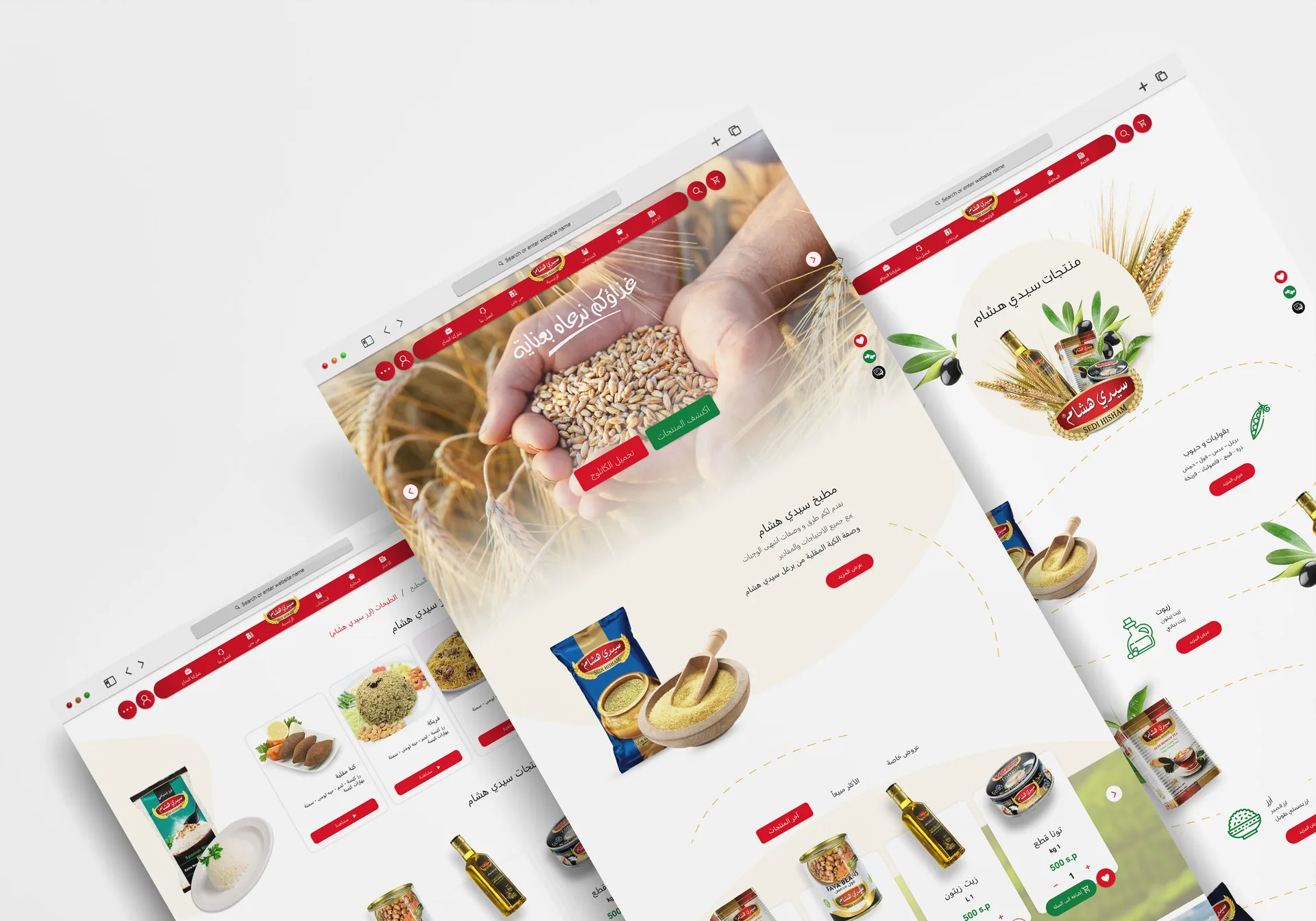
Sidi Hisham — food company website
Arabic-first site on Next.js with its own API: 24 product categories, recipes, news and careers.

Hawa Al Sham — dairy brand site
78 products in 14 filterable categories, ingredients and nutrition per 100 g, video hero.
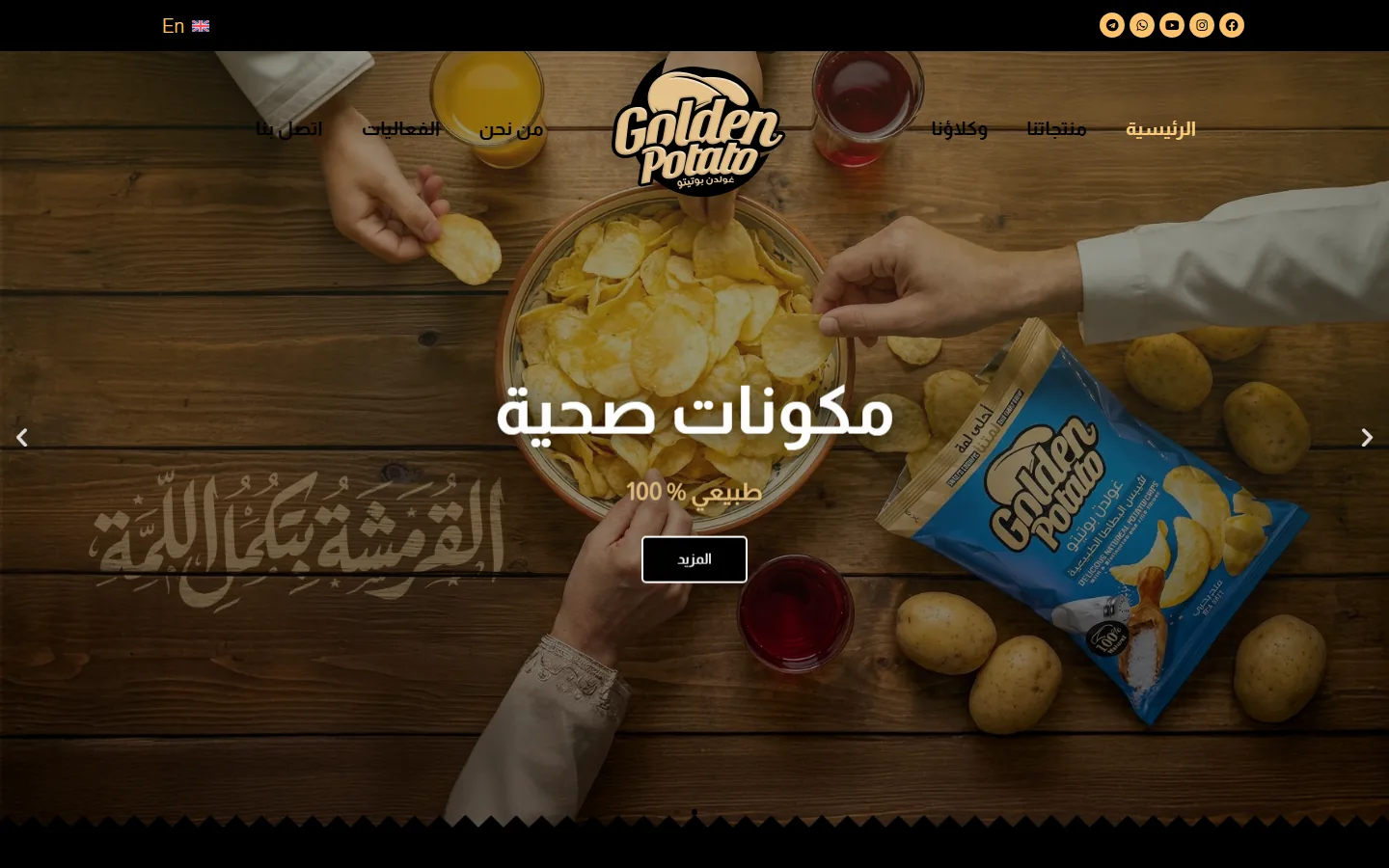
Golden Potato — snack brand launch
A new Syrian brand taken from name and identity to a live bilingual site and social presence.
Three digital products
A car-rental platform, the ODA payment app and a marketplace: flows, screens and admin.
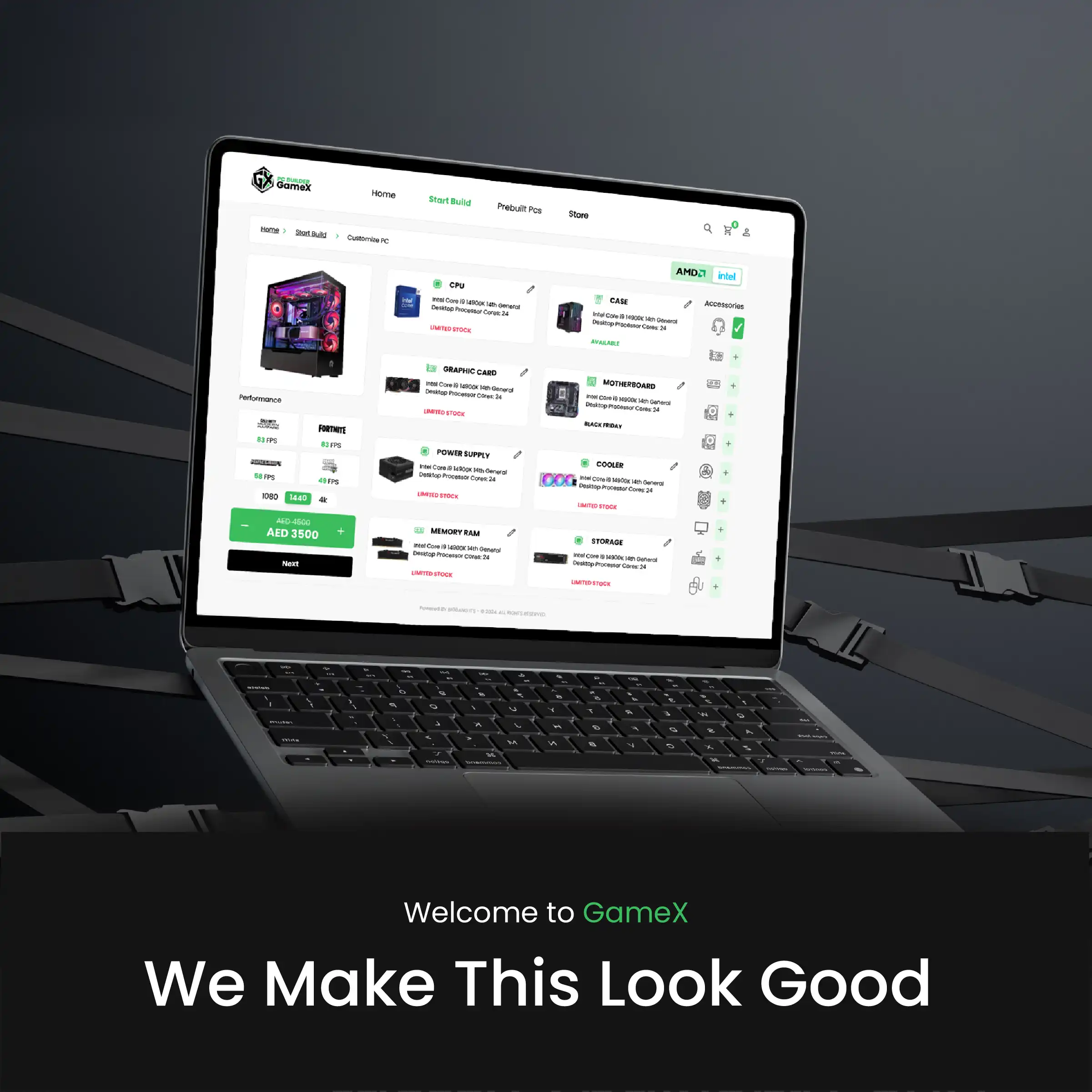
GameX — PC builder e-commerce
A configurator that checks part compatibility while the customer builds the machine.
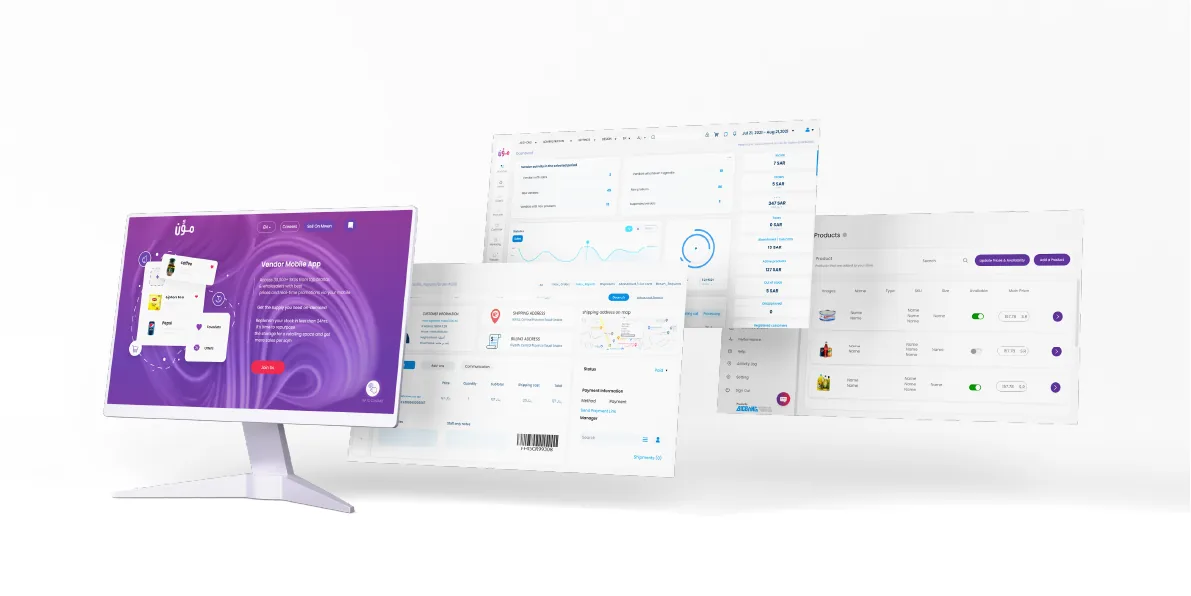
Multi-vendor marketplace
Customer app and vendor dashboard for a Saudi marketplace: listings, orders and payouts.
How a build runs
Six stages, each ending in something you approve in writing before the next begins. This is how a website and app development project runs, from brief to site.
01
Brief and scope
We write down what the site or app has to do, who uses it, and what counts as done. You get a scope, a stage plan and a fee before any design starts.
02
Structure
Page map, user flows and data model. For an app or a platform this is where roles, permissions and the states of every screen are decided.
03
Design
Interface design in Arabic and English on the same structure, with the components your team will reuse. Approved screen by screen.
04
Build
Front end, back end, dashboard and integrations — payment, shipping, mail, analytics — with a staging link you can open at any time.
05
MCP and AI layer
We build your MCP server, decide what it may read and write, connect it to your assistant, and test it against real tasks with your team.
06
Handover
Launch, documentation, a walkthrough session, and 30 days of fixes on anything that does not behave as specified.
How the fee is set
We do not publish a price list for development, because a five-page site and a booking platform share nothing but the word “website”.
What the fee depends on
The number of screens, whether the site needs its own back end, how many integrations it talks to, whether it is bilingual, and whether you want the MCP layer read-only or able to write.
What you get in writing
A scope with the stage plan, what each stage delivers, the fee per stage, and the date each stage ends — before anything is designed.
What is not extra
Arabic and English on the same build, the dashboard, the handover documentation, and the 30 days of fixes after launch.
Send a short brief and you will have a written proposal within two working days.
What the MCP layer does on an ordinary Tuesday
The difference between a dashboard you click through and a site you can talk to.
An MCP server is not a chatbot bolted onto a website. It is a small service that sits beside your site and publishes a list of actions an AI assistant may perform: read these posts, create a page, update this product, pull the orders for a date range, purge the cache. The assistant calls those actions the way a developer would call an API, except you asked for it in a sentence.
That changes who can do the work. Publishing a properly formatted article with a meta description, the right category and an internal link stops being a twenty-minute job for whoever knows the admin panel, and becomes a request. The same applies to the small changes nobody enjoys: a price across a product line, a phone number in three places, a banner that should come down tonight.
- Publish or update a page with its SEO fields already filled in
- Change a price, a stock level or a category across many products at once
- Read last week’s orders, sessions or form submissions and get a written summary
- Draft social posts from your own product data rather than invented copy
- Find broken links, missing images or pages that lost traffic
- Roll back a change, because every write is logged with what it touched
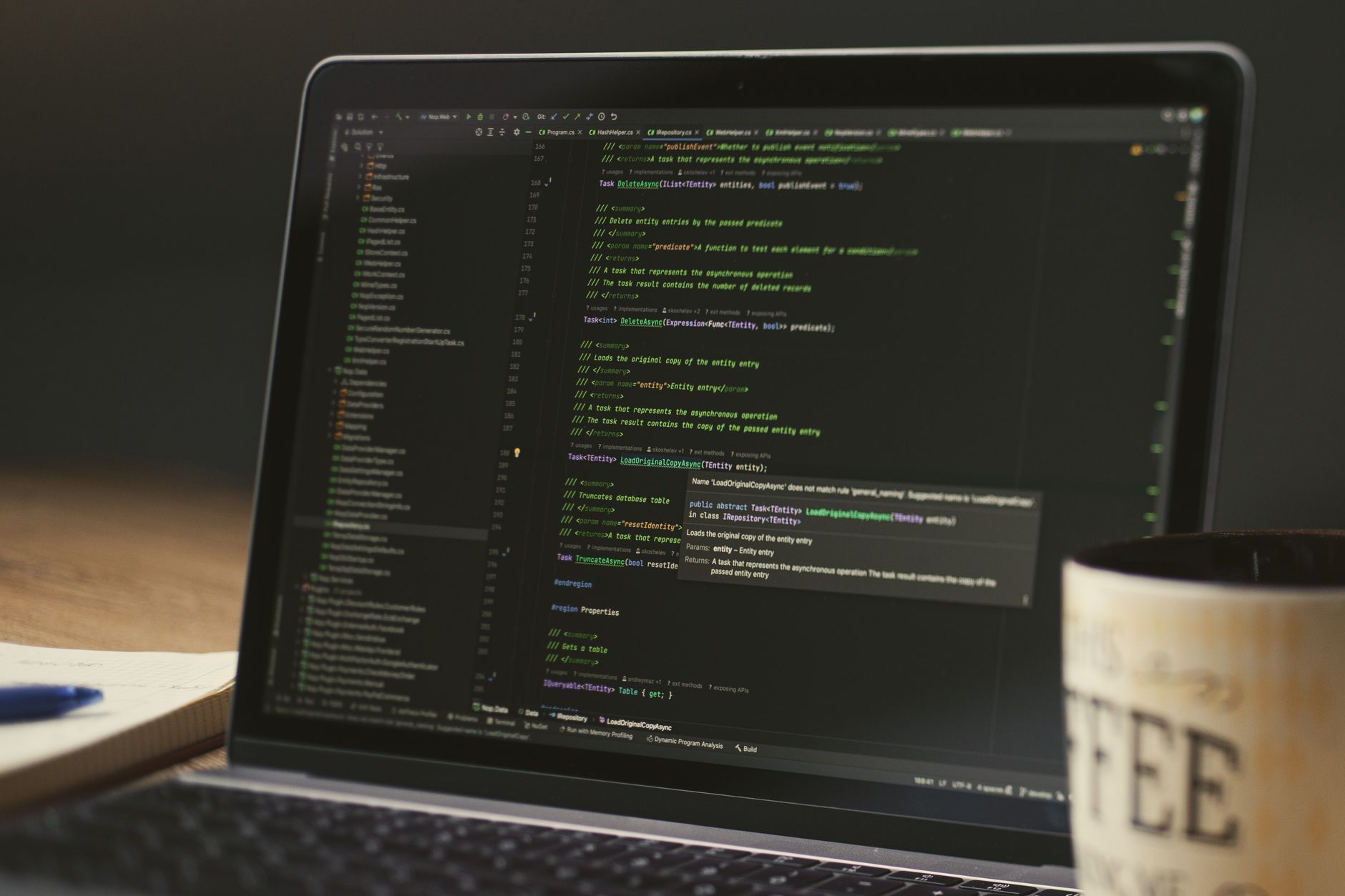
Permissions: how we keep an assistant useful and contained
The reasonable worry about connecting AI to a live site is that it will do something unasked. The answer is in the design, not in a promise. An MCP server only exposes the tools we write into it, so the assistant cannot reach anything else: no database console, no file manager, no billing.
We start every build read-only. Once your team is comfortable, we add write actions one by one, each with its own permission, and each recorded in an activity log that says who asked, what changed and when. Destructive actions — deleting content, changing payment settings, touching user accounts — stay out of the assistant’s reach entirely unless you ask for them, and even then they sit behind a confirmation step.
Every credential lives on your side. The token can be rotated or revoked in one step, and doing so cuts the assistant off instantly without touching the site itself.
Choosing the stack, and why it matters later
Four common answers, and the question that decides between them.
WordPress
Right when your team will publish regularly and you want a familiar editor. We build it properly: a custom theme or block set rather than a bought template, clean markup, and the plugin count kept low, because every plugin is a future update problem.
Next.js and a headless back end
Right when the site needs its own data model, speed matters, or the content feeds an app as well as a website. It costs more at the start and less over three years, and it is what we use when a site has to stay fast with thousands of products.
Shopify
Right when you are selling and want payments, shipping and taxes handled for you. We design the theme and build what the theme cannot do as app blocks and functions.
Custom build
Right when the product is the business — a booking engine, a marketplace, a platform with roles and payouts. Here the database and the permissions model matter more than any screen.
Arabic-first development: what actually changes in the code
Arabic is not a translation layer. A site built English-first and flipped later leaks in a dozen small ways, and every one of them tells an Arabic reader that the site was not built for them.
We set direction, typography and layout for Arabic from the first component: an Arabic typeface that reads well at small sizes, right-to-left mirrored layouts including icons and progress indicators, numerals and currency that keep their direction inside a sentence, and search that matches Arabic text with and without diacritics. URLs are written in Arabic where that helps readers — with a length check, because WordPress silently truncates long percent-encoded Arabic slugs and the page quietly becomes a 404.
- Arabic and English on one build, not two sites to maintain
- hreflang and a language switcher that lands on the matching page, not the home page
- Mirrored layout, icons and spacing rather than a CSS direction flip
- Arabic typography chosen for screen reading, loaded locally for speed
- Arabic slugs length-checked so they cannot break after publishing
- Structured data in both languages so search engines index both
Speed, search and answer engines
A site that loads slowly loses customers before it loses rankings. We build to Core Web Vitals from the start — images sized and served in modern formats, fonts local, scripts deferred, third-party tags kept on a short leash — and we measure on a phone, not on the office fibre.
Search is handled in the same pass: clean titles and descriptions, structured data for the organisation, services, articles and FAQs, a sitemap, and redirects for anything that moves. We also publish the file that AI answer engines read, so an assistant summarising your industry has the correct description of your company, your services and your locations to work from.
- Core Web Vitals measured on mobile before launch
- Structured data for organisation, services, articles and FAQs
- Sitemaps, canonical URLs and redirects for every changed address
- llms.txt and a clean robots file so answer engines read you correctly
- Analytics and a session-recording tool connected and verified
- A written baseline report, so later changes can be measured against it
Hosting and domains: our partnership with BIGBANG IT Solutions
The development side runs with a partner whose whole business is the infrastructure underneath it.
Websites fail for boring reasons far more often than for design ones: a domain nobody renewed, a server that runs out of memory on the day a campaign lands, mail that goes to spam because the records were never set. So the build side of this service runs in partnership with BIGBANG IT Solutions, an IT company whose business is hosting, domains and the infrastructure around them.
We have already delivered together. The Syrian food-brand sites published on this site — Sidi Hisham, Massa Foods, Golden Potato and Hawa Al Sham — were built in this same collaboration, which is why their credit appears at the top of this page.
What it means for you is one contract and no gaps: we design and build, they host and keep the domain, mail and certificates in order, and if something breaks at three in the morning there is no argument about whose side it is on. The domain and the hosting account stay registered in your company name, not ours and not theirs.
- Domain registration and renewal, in your company name
- Hosting sized for the site we built, not a shared plan chosen at random
- Business email on your own domain, with the records set so it is delivered
- SSL, backups and a staging copy of the site
- Monitoring, and one number to call when something is down
- Migration of an existing site and its mail, without downtime for your customers

What we see in sites we inherit
The five problems behind most “the website needs redoing” briefs.
- A page builder stacked on a template, so every change fights the theme
- Twenty plugins doing what four would do, three of them abandoned by their authors
- Images uploaded at camera resolution, making a 6 MB home page
- No staging site, so every fix is made live and Friday is a bad day to work
- The domain or hosting registered in the agency’s name, not the client’s
None of these are exotic; they are what happens when a site is assembled rather than built. We quote a rebuild honestly: sometimes the right answer is a rebuild, and sometimes it is two weeks of repair on what you already have. We will tell you which, before you pay for the wrong one.
Who this suits
Companies with a catalogue
If you sell products or services that need their own pages, filters and specifications, the site is a database with a face, and it should be built like one.
Businesses that publish
If your marketing depends on articles, cases or offers going out regularly, the MCP layer turns that from a scheduling problem into a conversation.
Founders with a product idea
If the software is the business, you need the flows, the roles and the data model settled before a line of code, and that is stage two here.
Teams stuck with an old site
If nobody can update the site without a developer, that is a structural problem with a fixed cost, not something to live with.
How to start
Send a short brief: what the site or app is for, who uses it, what it must connect to, and anything you already have — a domain, a logo, product data, an existing site. Two working days later you have a written scope with the stages, what each one delivers, the stack we recommend and the fee.
If you want to see the MCP layer before you commit, ask for the demonstration. We will connect an assistant to a sandbox site and let you ask it to publish a page, change a price and report on traffic, so you can judge the idea on what it does rather than on how it sounds.
Questions clients ask
What is an MCP server, in plain language?
MCP is an open standard that lets an AI assistant use real systems through a defined set of tools. An MCP server for your site is a small, private door: it exposes the actions you allow — publish a page, update a price, read last week’s orders — so the assistant does those things properly instead of guessing. You choose what is behind the door.
What can I actually do with it?
Ask your assistant to publish an article you wrote, change the price on a product line, add a new category, pull the ten pages that lost traffic this month, draft next week’s posts from your own products, or tell you what changed on the site yesterday. In Arabic or English.
Is it safe to let AI touch my site?
That is exactly what the scoping is for. We start read-only, add write access per action, keep every change in an activity log, and test on staging first. Nothing is exposed that you did not approve, and access can be revoked in one step.
Do you build mobile apps as well as websites?
Yes. We design the product, build it cross-platform for iOS and Android, and build the API, notifications and admin behind it. Our published app work so far is the design side — the ODA payment app, a car-rental platform and a marketplace — so ask for the development references directly and we will send them.
Who owns the site and the code?
You do. The domain, the hosting and the repository are registered in your company’s name, and the handover includes documentation and a walkthrough so another developer could pick it up.
How long does a project take?
A company website usually runs six to ten weeks from brief to launch; a store or a platform depends on the integrations and the amount of product data. The stage plan you approve at the start carries the dates.
Why choose Kenania for website and app development projects?
Because a website and app development project should deliver approved drawings, not only renders: we design from Dubai, submit through licensed local partners where required, and price per square metre from day one.
Start a project
Send us what the site or app has to do, and get a written scope back with the stages, the stack and the fee.