5 Outstanding Commercial Landscape Design Tips — Damascus
Introduction
Kenania Inventive Arts recently completed this commercial landscape project in Damascus, Syria — a space designed to balance aesthetics, functionality, and sustainability. Commercial landscapes present unique challenges: they must welcome visitors, support daily operations, reflect brand identity, and withstand heavy use — all while thriving in the region’s arid climate. In this post, we share 5 proven strategies we applied to this Damascus project, plus behind-the-scenes insights into our design process. Whether you’re a developer, hotelier, or business owner, these tips will help you create an outdoor space that impresses clients, comforts employees, and stands the test of time.
Start with a Thorough Site Analysis
Before any design work begins, we invest time in understanding the site. For this Damascus commercial project, we analyzed:
- Climate & microclimate — sun paths, prevailing winds, and heat reflection from surrounding surfaces
- Soil conditions — drainage capacity, composition, and suitability for proposed planting
- Existing context — neighboring architecture, sight lines, pedestrian flow, and vehicle access
- User behavior — how staff, clients, and visitors will move through and interact with the space
This analysis informed every decision that followed — from plant selection to paving materials to lighting placement. Skipping this step is the most common mistake in commercial landscape design.
Understanding the Site — The Foundation of Great Landscape Design
Before any design work begins, we conduct a thorough site analysis. For this Damascus commercial project, we evaluated:
- Climate & microclimate — sun path, wind patterns, and heat reflection
- Soil conditions — drainage, composition, and suitability for planting
- Existing context — neighboring buildings, views, and access points
- User behavior — how people will move through and use the space
Hardscape & Softscape Balance — The Secret to Lasting Commercial Landscapes
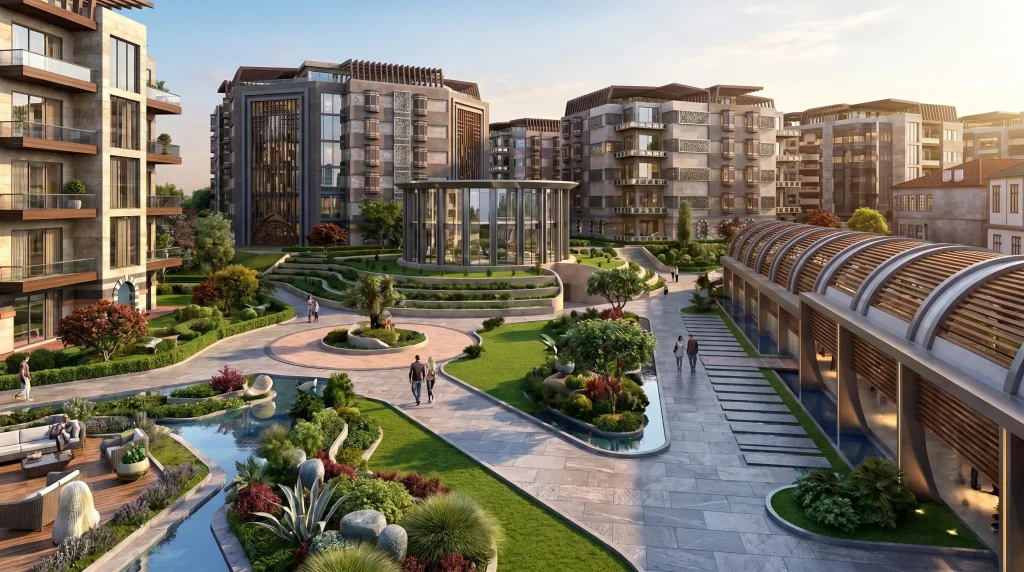
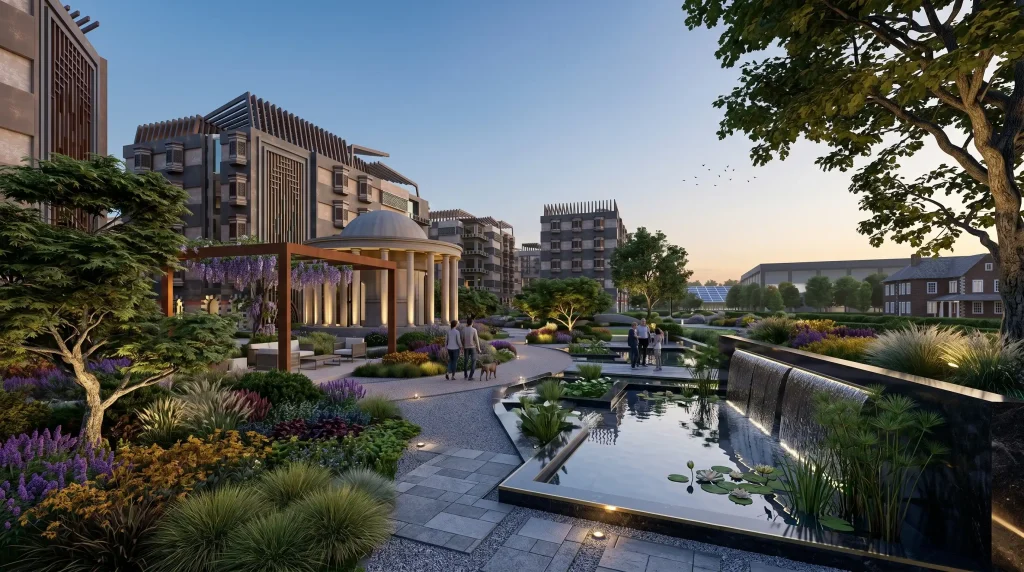
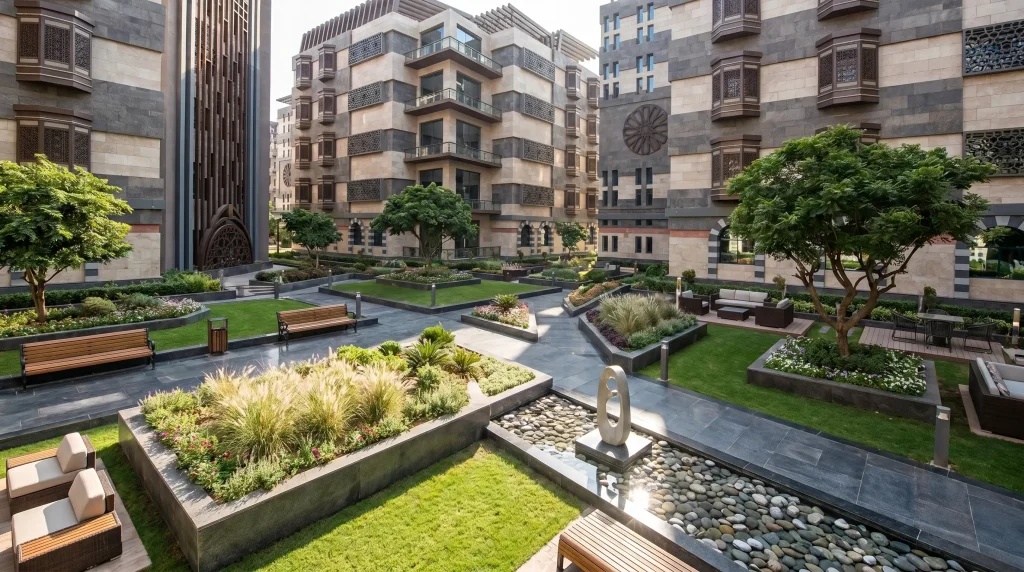
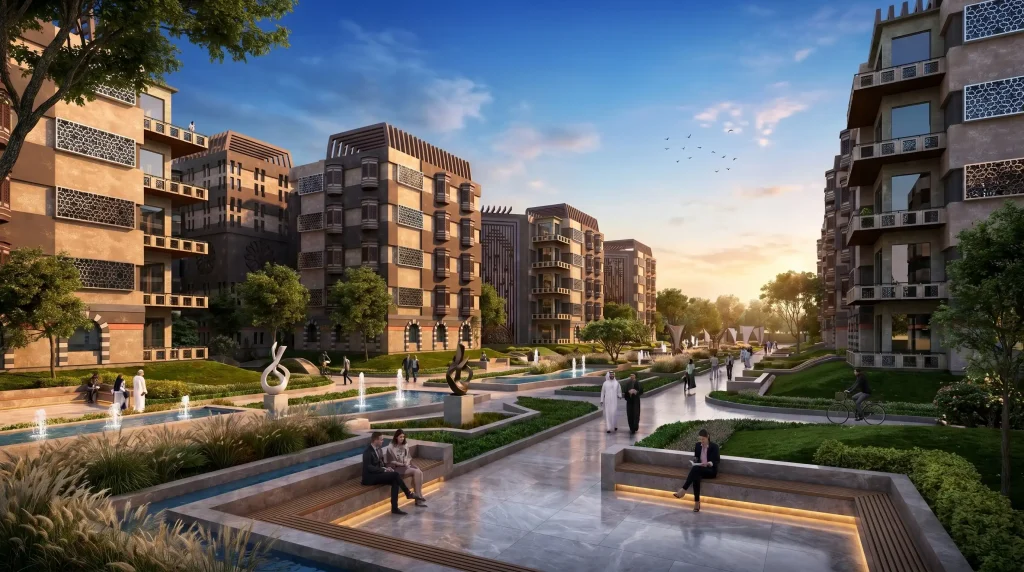
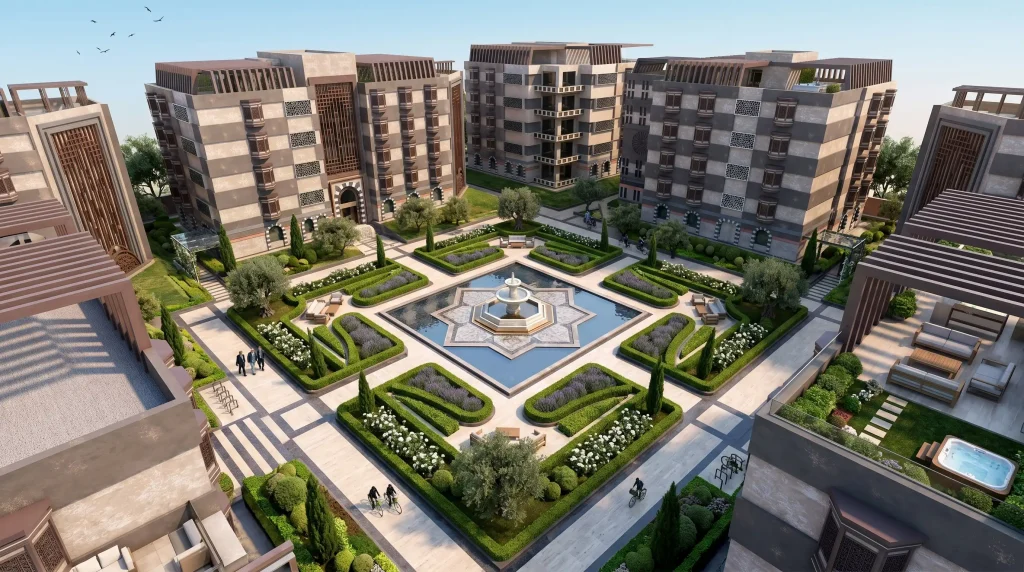
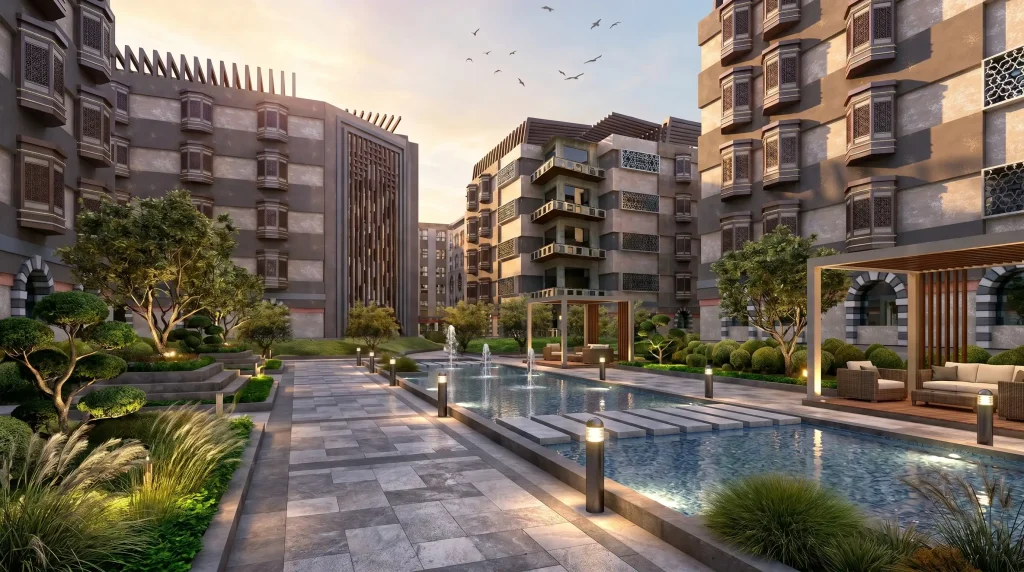
A successful commercial landscape strikes the perfect balance between hardscape (pathways, plazas, seating walls) and softscape (plants, trees, grass). In this Damascus project:
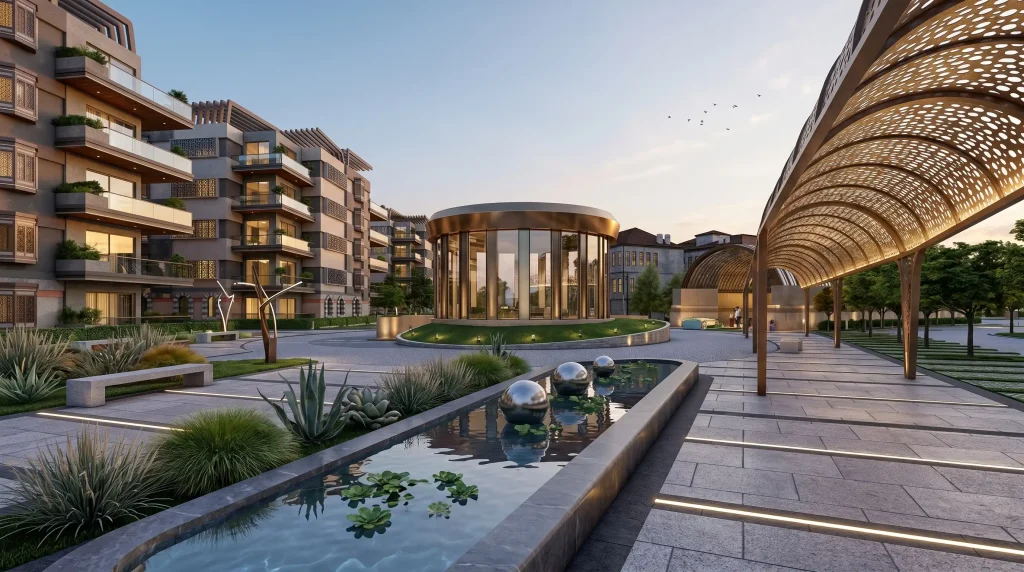
- Hardscape — natural stone paving, shaded seating zones, and defined walkways
- Softscape — drought-tolerant native plants, ornamental trees, and lush green buffers
- Lighting — ambient path lighting and accent uplighting for evening use
Water Management & Sustainability
In arid climates like Damascus, water-efficient design is non-negotiable. We implemented:
- Drip irrigation zones with smart controllers
- Native xeriscape planting to reduce water demand
- Permeable paving to manage stormwater runoff
- Shade structures to reduce heat island effect
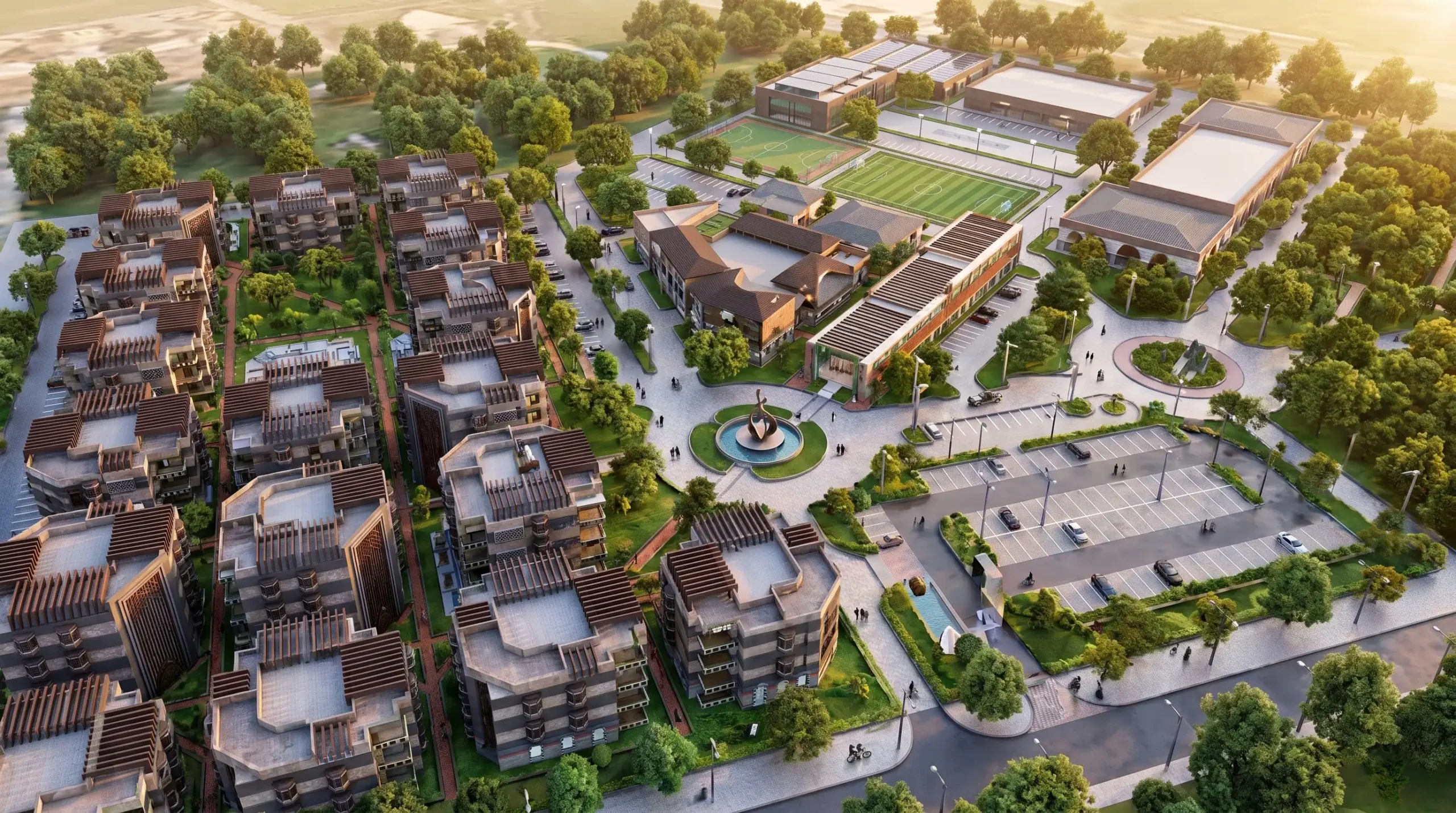
Balance Hardscape and Softscape
A successful commercial landscape feels neither like a concrete desert nor an untamed garden. The magic lies in the balance. In this Damascus project:
- Hardscape — natural stone paving defines clear pathways, plazas for gathering, and shaded seating walls. We used local stone to reduce cost and reinforce regional character.
- Softscape — drought-tolerant native plants, ornamental trees, and layered ground covers soften the hard edges and provide visual interest across all seasons.
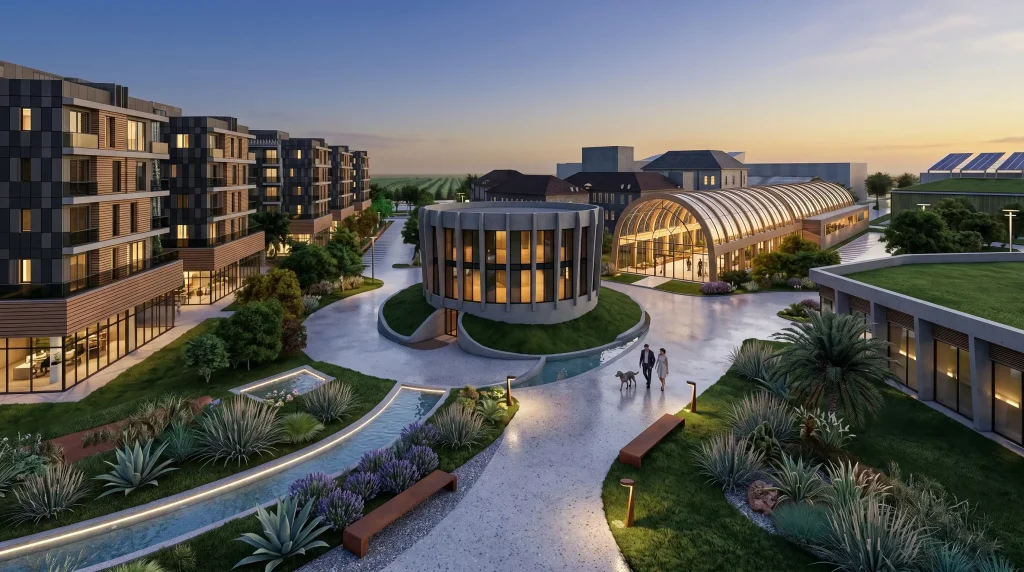
- Lighting — low-level path lighting guides movement after dark, while accent uplighting highlights key trees and architectural features.
Essential Strategies for Commercial Landscape Success
| Define clear zones | Separate circulation, seating, and green space for intuitive flow |
| Use native planting | Lower maintenance, higher survival rates, authentic local character |
| Layer lighting | Extends usability into evening, enhances safety and ambiance |
| Design for all seasons | Evergreen structure + seasonal accents = year-round appeal |
| Integrate branding | Commercial landscapes should reflect the business identity |
Prioritize Water Efficiency & Sustainability
Water is precious in the Middle East, and commercial landscapes consume significant resources if not designed responsibly. We implemented several water-saving strategies:
- Drip irrigation — targeted watering delivered directly to root zones, reducing evaporation and runoff
- Xeriscape planting — native and adapted species that thrive with minimal irrigation
- Permeable paving — allows rainwater to recharge the ground rather than overwhelming drainage systems
- Shade structures — pergolas and canopy trees reduce heat island effect and lower cooling costs for adjacent buildings
Sustainability isn’t just good for the environment — it reduces long-term operating costs for the property owner.
Project Highlights
| Location | Damascus, Syria |
| Type | Commercial Landscape |
| Services | Landscape Architecture, Hardscape Design, Planting Design, Irrigation Planning |
| Style | Modern / Contemporary |
| Area | |
| Status | Completed |
Why Choose Kenania for Your Commercial Landscape Project?
Multidisciplinary team — architects, interior designers, and landscape planners work together
Remote delivery — we collaborate across Syria and the Middle East via 3D tools
Proven portfolio — 950+ projects across commercial, residential, and hospitality sectors